Jan 30, 2020 @ Curbside Cycle, Toronto Recap and photos by Janet Joy Wilson & Jun Nogami. Video production and editing by Ryan Shissler, Low VELOcity Cycling. Originally posted on Dandyhorse.
Bike Minds is “a bicycle-themed storytelling event where guests share positive, personal, and inspiring stories related to cycling.” There are three gatherings scheduled for Toronto in 2020. Last night was the first one, on the theme of Bikes and Growth. We were hosted by Curbside Cycle who were good enough to close early and clear their showroom floor to accommodate the audience.
Our emcee for tonight was the one and only Janet Joy Wilson, founder of The Reading Line.
Julia Huys
Our first speaker was Julia Huys, who was 19 when she went on a 3,400-km bike tour from London to St. John’s with her father. She saw it as an opportunity to share one of her father’s favourite pastimes. In the end, what she learned was to slow down and to appreciate simpler things. They averaged an incredible four flats a day. (Someone should have asked which brand of tire they were using!)
Julia shared some beautiful photos accompanied by journal entries. The tour obviously went well, as she has also done circle tours of Lakes Superior and Michigan with her dad since then.
The next speaker was Kevin Dunal. He and his wife have been car free since August 14, 2018. He said that we are all creatures of habit, and that keeps many of us from examining how much a car is really necessary in our lives.
What has he learned from this experience?
Using car share in the downtown area is easy when you really need one.
Think of transportation as a service: use what you need.
There is no such thing as bad weather, just bad clothing
They feel much more connected to the city.
And, finally, everyone’s favourite: not paying for a car justifies buying more bikes.
Ryan Shissler
Next up was Ryan Shissler who said that moving to Canada (from Michigan) was the best mistake that he ever made.
Ryan shared his experiences with depression, under the weight of significant student loans. His slides charted his trajectory, both in terms of debt load and state of mind. At one point he was working three jobs and needed a car. However, the expense of running a car was pushing him further into debt, and so he switched to biking. Even so, initially things were not so easy.
He eventually got to a better place, in part from making friends though cycling. The happy ending to his story is that he now has a job that includes biking, as the communications lead for Cycle Toronto.
David Shellnut is a personal injury and human rights lawyer who in recent years was recovering from both an assault and also being “right hooked” while riding his bike. He talked about the way that the trauma has changed his outlook on biking. He was angry and frustrated, and it was difficult to get back on the bike. He recommended reading an article by Bronwyn Graves, published in NOW magazine in June 2019.
He is now supporting the cycling community as the Biking Lawyer, and gave us some advice on what to do if you are ever in a collision.
Robert Zaichowski is a long time cycling advocate, as well as a current member of the Cycle Toronto board.
His day job is a chartered accountant, and his comfort with data has lead him to use statistics to affect change. His analysis was part of a lobbying effort by Cycle Toronto that eventually got the City to double the annual cycling budget to $16M.
He and Albert Koehl have been tracking the slow pace at which the City has been installing cycling infrastructure; some of this has been published in dandyhorse. He closed by saying that we should keep asking questions, collecting data, and sharing our stories with people outside of this room.
Our final speaker was Agata Rudd, who told us about the tour that she and her husband did in 2014: over 5,000 km by bike in Southeast Asia over five months.
She observed that everywhere they went, they saw environmental degradation, in the form of trash strewn by the roadside, or plastic pollution on every beach in every country that they visited. This really cemented her interest in reducing waste, even during the tour. She and her husband now have a small child, and she has founded BikeSeed, a group to encouraging family biking, particularly with small children.
Afterwards, there was plenty of time to talk with the speakers and others. Curbside was also offering a 15% discount on accessories.
Thanks to all the speakers, the Bike Minds volunteers, Curbside Cycle, and also Amsterdam Brewery for the variety of bike themed beer, for a fun and informative evening! We can all be spokes-people for change … one story at a time.
Jan 29, 2020 @ Mill Street Brew Pub, Ottawa Story by Laura Mueller. Photos by Mark Davidson
The first-ever Ottawa edition of BIKE MINDS opened on Jan. 29, 2020 with a confession from event co-founder and host Matt Pinder to the sold-out crowd: BIKE MINDS isn’t just about storytelling – it’s an advocacy event. The launch of BIKE MINDS beyond Toronto featured a grab bag of tales, from personal reflections to trip recollections, and even a first for the event – a cycling-themed poem.
Linda Collette
Linda Collette lives in Ottawa and loves the diversity of people living in Hintonburg. She thinks it is an edgy neighbourhood, which makes it interesting. She love being close to bike paths and Gatineau Park.Through volunteer work, and being social, she has met incredible people who have worked hard to transform the community. One of her volunteering gigs includes being Mrs. Santa Claus at the Carleton Tavern on Christmas Day.
The evening began with a trip back in time on a Rocky Mountain adventure with Linda Collette and her friend, Denise. While the story took place 20 years ago, the sense of independence that Linda derives from cycling is still very much present to this day.
A mix of travel guidance, bike-repair advice and spectacle, Linda’s story did not fail to entertain. After recounting some of the iconic trails that formed the backdrop for the adventure, Linda scored some points with the bike mechanics in the room by explaining her MacGyver repair techniques, using cutlery to fix a flat tire and even replacing a bolt with a shoelace.
The climax of the story came when Linda described her friend flying over her and landing straight in the frigid Athabasca River – complete with a splash of water to the face for Linda to illustrate the point!
Denise Inglis
Denise Inglis is a cycling instructor extraordinaire. She teaches people how to bike, safe biking in an urban environment, bike maintenance and a love of cycling. She leads youth on cycling outings exploring the city on 2 wheels; She leads older adults on weekly cycling outings; and in her spare time she volunteers by delivering Meals on Wheels by bike, and enjoys chauffeuring her bike loving dog around town. If Denise looks familiar, it is because she also stars in many of the City of Ottawa bike tutorials.
Denise began her story by asking the audience what their lives would be like if they couldn’t ride a bike. Far from a thought experiment, she was describing the reality of many women in her community – in particular, those who are newcomers to Canada.
As a cycling instructor, Denise was recruited by fellow Velo Vanier volunteer Rose Anne Leonard to teach women how to ride a bike. Rose Anne, who ran the Velo Vanier’s free bike-share program, noticed that very few women took advantage of the service. Determined to change that, she recruited potential students by reaching out to women when they came to collect their children after school. Soon, Denise found herself instructing a new type of student.
Her very first student, Esther, made great progress in a matter of hours. Since then, Denise has taught many more women how to cycle – following in the footsteps of the Netherland’s renowned Mama Agatha.
The 2019 Bruce Timmermans Award winner also garnered a lot of questions about her other volunteer cycling gig as a meal-delivery courier for Meals on Wheels, operated out of the Good Companions Centre. Click here for more information.
Paul Galipeau
Paul learned to ride a bike before he learned to read and is a prolific routebuilder with the Ottawa Valley Bikepacking Collective. Through past positions with Parks Canada and the Rideau Trail Association Board and currently as RideWithGPS Ambassador, Paul’s passion for human-powered geographic exploration of Ottawa has unlocked an approach to self-supported endurance adventures that nearly anyone can take on. Follow Paul on Instagram @paulmsg.
Paul inspired and entertained the crowd with his TED Talk-style tale of following his heart – a.k.a. the boundary of the City of Ottawa.
Aiming to inspire, Paul encouraged attendees that if they were attending BIKE MINDS, they too were the kind of people who could bike the 300 km perimeter of the city in 24 hours. In fact, he’s looking for people who’d like to do just that this coming summer.
It will be Paul’s second time making the trek. The odyssey began in 2017, when he mapped out a route that closely followed the heart-shaped boundary of the city’s limits. An avid trip mapper, he posted the route to a local cycling group on Facebook, but didn’t get any takers.
Fast forward 638 days and Paul found himself home alone with a free weekend. Thinking the journey might take 48 hours, he set off from the Prince of Wales Bridge, heading west. Along the way, he couldn’t help but notice the irony of the Ottawa welcome signs, which promote Ottawa as a bike-friendly city – in rural locations devoid of any cycling infrastructure. But, the signs do send a message to drivers to share the road, and to Paul, that seemed to be working.
When he reached Ashton Village west of Ottawa, Paul was ready to throw in the towel, but a hot meal got him back in the saddle and he kept going until his bike lights burnt out at 1 a.m.
After a few hours of sleep, he was back at it, hopping barriers and exploring parts of the city that would be impossible to traverse by car.
If you are interested in joining Paul to repeat the journey this summer, you can get in touch with him via Instagram @paulmsg. If you’ve biked the perimeter of Ottawa or another municipality, Paul encourages you to use the hashtag #loopyourcity to share your trip.
Jay Heins
Jay is a dad, husband, son, entrepreneur, and huge Bon Iver fan, in that order. Works with Tanya at home doing education technology consulting. Escapes to the Gatineau Park by bike when things get hectic and thinks in poems while riding. Ambivalent racer: loves flow moments, dislikes crashing. Helps with organizing and comms for local cycling events including Tuesday Night Crits and the Eastern Ontario Cyclocross Series.
Jay treated the crowd to a creative interlude and a BIKE MINDS first – the performance of an original poem.
To open, Jay reflected on the parallels between riding a bike and reading poetry – the pleasure, vulnerability and joy, measured in moments. Jay thinks of poems while riding his bike.
The poem Jay wrote and performed is called Machinery of Joy.
Chris Bouchard
Chris Bouchard has worked in the public and private sectors, leading a variety of policy and infrastructure projects. Working with researchers at the University of Ottawa, Chris’s forthcoming book will discuss how different governments are implementing cycling infrastructure. Chris loves riding with friends and family. While inter-City adventuring, they have explored countries in Europe, Africa and North America by bike.
Next up was Chris Bouchard, who recently moved to Ottawa for a job in academia following a decade-long career in active transportation planning in the City of Toronto.
While they worked with brilliant minds in Toronto, Chris noticed a gap. Even the most perfect transportation plan would not get people home safely because transportation is a social process.
That’s where the machinery of government comes in – something that Chris is now studying and writing a book about.
One story Chris reflected on is a network of cycling trails that were built not with the support of a pro-cycling mayor, but rather, under the leadership of Rob Ford. The mechanics of how different governments are implementing cycling infrastructure is now the focus of Chris’s work as a researcher at the University of Ottawa.
Chris came to urbanism from a very interesting starting point, having hand delivered Jane Jacobs’ manuscript for Dark Age Ahead while working as a bike messenger.
Shawn Smith
Shawn Smith is a professional engineer with 16 years of experience in the transportation sector. In his current role as Senior Project Manager at WSP in Ottawa, he is helping build more active and healthy communities across Canada. Shawn can often be seen cycling around his neighbourhood with his wife and three kids, spreading smiles, warming hearts, and dreaming up ways to get more people on bikes.
Shawn’s story, entitled “My Journey of Self Discovery: Cycling at the Speed of Life” detailed a journey from childhood to transportation engineer and author, illustrated by photos.
As a child growing up in the east end of Ottawa, Shawn experienced the freedom of getting around on his own by bike, and celebrating cycling by displaying his elaborately decorated bike in a local bike parade.
But like many teenagers, he soon traded his two wheels for four and lost touch with cycling for a whole decade. Eventually, while working as a highway engineer at the provincial Ministry of Transportation, Shawn took a temporary posting in Thunder Bay. There, he rediscovered his love of cycling through a 4km commute, which he often extended by taking the scenic route.
When he returned to his office in Toronto, Shawn tried biking to work, but felt something was lacking. He formed a bike users group at his workplace and felt the success of a few wins: indoor bike storage was added, and the group held lunch-and-learn sessions for other interested staff.
Shawn wanted to do more to influence his colleagues and his profession. He made the leap into an active transportation role in York Region, where he was able to see the implementation of his big idea for a median cycling facility to protect cyclists from highway ramps.
Now back working in Ottawa, Shawn also published a book, called Happy Trails, which details 40 biking and hiking adventures in and around the Greater Toronto Area.
Cécile Lecoq
Cécile came to Ottawa from France on a one-year exchange program in 2006, and never went back. She’s passionate about sustainable mobility and determined to walk, bike and bus the talk. When she’s not reading about urbanism, she enjoys spending time with her two boys, playing the piano and going to the theatre.
Cécile’s story opened with a description of observing Car Free Day by making the nerve-wracking, 15 km trek to work by bike for the first time since moving to Aylmer five years prior.
She never considered herself a motorist. In fact, Cécile works at a transit agency. But she had been driving to work every day for one reason – her 18-month-old son.
Cécile detailed a struggle that many parents face – the search for affordable and accessible daycare. When she was offered a $7 per day daycare spot for her youngest son, she jumped at the chance – only to later discover how difficult it would be to take him there by bike and get to work on time.
Eventually, Cécile decided to make a change – she gave up the affordable daycare spot for a more convenient (but more expensive) option. That allowed her to get back to commuting by transit, giving her time to read books en route, which she thinks led to a promotion at work.
Later, when their car needed to be replaced, Cécile’s family decided to get an electric cargo bike instead. This big improvement in her quality of life all started with that one Car Free Day bike commute.
The Ottawa volunteer team was proud to host this debut event but needs your help to keep the series going! Submit your story today and be featured at one of our next events.
The BIKE MINDS Ottawa event organizers: Rie Nakamura Drolet, Mark Davidson, Suzanne Woo, and Matt Pinder
March 31, 2019 @ Ontario Bike Summit Story by Joan Milway. Photos by David Keogh.
How does cycling help people to find and create a sense of community? The March 2019 installment of BIKE MINDS aimed to answer this question. The event was held in partnership with Share the Road to kick off the annual Ontario Bike Summit, and featured the largest BIKE MINDS audience yet – 120 people! Jamie Stuckless, executive director of Share the Road welcomed the large crowd to the summit, and Matt Pinder shared an intro on the value of community and the mission of BIKE MINDS.
Sarah Bradley
Cycle Toronto is a member-supported, not-for-profit organization that works to make Toronto a healthy, safe and vibrant cycling city for all. They focus on advocacy, education and encouragement in order to shape policy and infrastructure, and build community to transform our city’s cycling culture. They engage a diversity of people in their work, pursuing evidence-based solutions that make cycling a viable option for all Torontonians.
The first speaker of the evening was Sarah Chau Bradley of Cycle Toronto. In her presentation, titled Finding my way by bike wherever I land, Sarah spoke about her experience growing up in downtown Toronto biking around wherever she had to go, and discovering her city by bike through bike raves, races and fundraising rides. When she moved to different cities around North America she was always able to find community and things to do with a bike – even when she was working on a farm in rural British Columbia.
Sarah told the group about how even though Cycle Toronto is known for their advocacy work, they also do quite a bit of work educating and encouraging people to ride their bikes more. Cycle Toronto hosts a wide range of group rides that are open to everyone, and can be a great place to form friendships and make memories. Even if you haven’t ridden a bike since you were a child, joining a Cycle Toronto group ride is a surefire way to find community.
Dave Shellnutt
Dave grew up cycling on the Niagara Escarpment in Ontario, Canada. Now, Dave cycles year round to work as a lawyer in Toronto representing injured cyclists, ensuring they get the support they need. Unique to most lawyers in this field, Dave takes a proactive view of penalty enforcement when it comes to car drivers who have dangerously or negligently hit his cycling clients. He advocates with the police, prosecutors and city officials to ensure that the toughest penalties are applied.
Next up was Dave Shellnutt, otherwise known as The Biking Lawyer. Dave spoke about how he has been able to use his legal background to support the cycling community. Through representing injured cyclists, Dave has seen how careless drivers can be and has become a more defensive cyclist as a result – ringing his bell, wearing a camera while riding, and never instigating or escalating a conflict. Although the constant defensiveness can be draining, Dave has found positivity and community in advocacy – whether it be through attending a ghost bike ride or a die-in, or providing free “Know Your Rights” workshops to people who ride bikes. Dave shared that it is profoundly invigorating to give back, show up and support your community.
Caitlin Lee
Caitlin Lee is a fourth-year civil engineering student at the University of Toronto with a personal vision to design safer, more connected and efficient cities. Growing up in the suburbs, biking has been her go-to way to explore new places and get some fresh air. When she’s not worrying about the next problem set or assignment due, she enjoys combining biking with photography, documenting her adventures and capturing the new sights she sees.
Caitlin Lee shared a story of her journey of growth, adventure and belonging while biking in the ‘burbs, and how she found a home away from home in Brampton. When Caitlin moved to Brampton to stay with her aunt during her internship at the Region of Peel after her third year at University of Toronto, she began cycling the five kilometre trip to work everyday, This opened up a new side of Brampton to her.
A flat tire one day led Caitlin to a drop-in repair session at the Brampton Bike Hub, where she was first welcomed into Brampton cycling community. She joined PedalWise, where she received mentorship and learned about nutrition and how to properly handle her bike. Caitlin started documenting her trips on Strava, and explored parks and conservation areas by bike. She joined Bike Brampton community rides, and for her goodbye Brampton ride with her mentor she went for a 100 kilometre ride to Tottenham, breaking her own personal record. All in all, discovering the bike community in Brampton changed her entire experience living there.
James Hetmanek
James Hetmanek is the President of bicycle-power event service company Tune Your Ride and Director of the Toronto Bicycle Music Festival. In 2019 the TBMF is celebrating 10 years of presenting free concerts in and between Toronto’s great community parks on stages powered by stationary bicycles.
James Hetamek from Tune Your Ride was next up, talking about his experience connecting people, parks, music and bikes at the Toronto Bicycle Music Festival. In partnership with Cycle Toronto and Arts in the Parks, Tune Your Ride leads group bike rides from park to park with different concerts in each park. The concerts themselves are pedal powered by members of the audience. Without the support of volunteers and funding partners, the Toronto Bicycle Music Festival would have never been possible. According to James, when you bring bikes and arts together you create and nurture spiritual capital.
James shared that while this will be the last year for the TBMF, after this year he will be putting his energy into a new project called Best of Our Neighbourhoods, or BOON. BOON brings the elements of the TBMF to parks around the city, but activations will be led by local groups to make them more community-focused.
Janet Joy Wilson
Janet Joy Wilson is Artistic Director & Co-founder of The Reading Line. She produced six free events to connect authors, cyclists, community changemakers & businesses on literary group bicycle rides along routes requiring cycling infrastructure improvement. She has dedicated volunteer time locally and globally to Cycle Toronto, Habitat for Humanity and Canadian Ecology Centre to name just a few. She is committed to helping make this city a better place one book and one street at a time.
Janet Joy Wilson from The Reading Line gave an enthusiastic overview how she bridges communities using bikes and books on “Book Rides”. She started The Reading Line with a coworker once they realized their shared love of bike advocacy. The Reading Line is a group bike ride that goes from park to park, with multiple stops where different authors read from their books. They have even had Toronto’s poet laureate out at one event, which drew lots of media! In addition to creating bike advocates out of book lovers. She uses the ride as an opportunity to promote bike powered businesses and partner with organizations like Evergreen Canada. With grants and funding she was able to steadily scale up the event and expand to the point where last year hundreds attended the Viaduct edition of The Reading Line.
Justin Jones
Justin Jones is a project manager, sustainability professional and rabble rouser with over a decade of experience working to make communities happier, more accessible and more sustainable. He has been working with the Share the Road Cycling Coalition for 6 years, helping communities all over Ontario become better places for people on bikes. He lives in Collingwood, Ontario, where he is often found on the Town’s numerous trails with his wife, two daughters and two Golden Retrievers.
Our sixth storyteller was Justin Jones, who shared his life story of bikes, community and family. Hailing from Carstairs, Alberta, teenage Justin would have never pictured himself where he is today – living in Collingwood and transporting his young family around by cargo bike. When Justin turned sixteen, he bought his first car, and it was everything to him. He drove his friends everywhere with him, even the 300 metres between his school and the convenience store.
When he eventually moved to Toronto to do his Masters, Justin began by walking everywhere, but as his friend group and community grew, he had to start taking the TTC. After just a few weeks, he began to become frustrated with transit. He became bike-curious, and tried it out. The experience was life changing, and he began using his bike as a tool – the best tool – to get from A to B in the city. When he moved to Hamilton he founded an advocacy campaign called Yes We Cannon and built a community around the vision of a safer street with quality cycling infrastructure, which was eventually approved and built by the city. He made friends, and together they helped people see their streets in a different way.
Sabat Ismail
Sabat is a student and a year-round cyclist who is interested in city-building. Her love of cycling lies in the bicycle’s ability to create space for radical re-imagining.
Our headliner for the evening was Sabat Ismail, who spoke about bikes, community and empowerment. Sabat began riding in her Markham basement, with her training wheels and her dad teaching her. Eventually she made it out onto the sidewalk, and continued to ride her brother’s hand-me-down bikes. Finally, in June of 2014 her dad offered to buy her a new bike! She got a neon green CCM and biked all over Markham – and found it to be way better than the local bus. She found it empowering to be in charge of her own mobility, and interacted with her community and neighbourhood in new ways.
When she moved to Toronto, Sabat began going to Bike Pirates and built her first bike at their trans and women Sundays. Whereas before going to Bike Pirates, she wasn’t aware of how much space she wasn’t taking up, she suddenly felt an empowerment to take it up! This raised some questions, including: who do we offer space to in this world, and at who’s expense? Sabat met a woman from Black Girls Do Bike, and was inspired to start BikePOC, a group for BIPOC (Black, Indigineous People of Colour) who identify as women, trans or non binary. The mission of the group is to create a safer space and generate exposure for these folks in the cycling community.
Bikes+Community was the last BIKE MINDS event of the Spring 2019 season. Did you attend an event in 2019? Please fill out our feedback survey to help us improve for future events!
Feb 27, 2019 @ Fix Coffee + Bikes, Toronto Story by Caitlin Lee. Photography by David Keogh.
Despite the snowy weather, it was a full house at Fix Coffee + Bikes for the sixth episode of BIKE MINDS. This episode’s theme was Bike+Careers. We heard stories about how some have built their career with the help of bikes and how others have used their life experiences to improve active transportation for the next generation.
Armi de Francia
Armi de Francia is a city builder and Active Transportation Coordinator who strives to enable more communities to receive the benefits of active and sustainable transportation. She has contributed to active transportation and community engagement projects in the GTHA, Montreal, and Ottawa. Armi realized how bikes can leverage the potential of communities through her experiences growing up in the suburbs, travelling, working with schools, and implementing community events. In this episode of Bike Minds, Armi will share stories of how bikes connect people to opportunities and to each other in areas beyond downtown Toronto.
To kick off the event, Armi de Francia, Active Transportation Planner and Coordinator spoke about how her upbringing in the suburbs shaped her career in active transportation and how bikes have the potential to leverage racialized communities.
Armi grew up biking as a kid in Scarborough despite the lack of infrastructure, bike racks and even a helmet. A near miss collision when she was 12 years old stopped her from biking and and this continued when she eventually moved to Pickering and was only able to drive and take transit to get around. She completed her Master in Urban Planning in Montreal and was inspired by the bike infrastructure and walkability there. That experience, combined with attending a road safety workshop by Cycle Toronto, allowed her to gain the confidence to start riding again.
In 2015, Armi attended a presentation by Veronica O. Davis about mode equity and she learned that the neighbourhood she grew up in was not the only racialized community that lacked access to bike infrastructure. With this in mind, she shared examples of how we can create spaces for marginalized people to share their experiences. Becoming a bike host mentor allowed her to share her own experiences and through The Untokening, a multi-racial collective, she met other racialized bike advocates and found a place for her own voice. Armi has learned how bikes can connect people and create freedom and through her lived experiences she is committed to leveraging racialized communities in the suburbs so they can receive the benefits of active transportation and overcome barriers she had while growing up.
John Spagae and Ollie Sheldrick
BikeSpace is a community-built web app supported by the City of Toronto and Cycle Toronto. It lets people report the issues they find when trying to park their bikes in the city. Contribute to Bikespace’s open data set and help reinforce the need for improved bike parking in Toronto.
Next up was John Spagae and Ollie Sheldrick, Web Developers for Bike Space, a community web-based app that allows users to identify and report bike parking issues. They talked about the origins of Bike Space, its evolution with support from agencies and the community and what they have in store for the future of the app.
Finding bike parking that isn’t already full, occupied by abandoned bikes, or in poor condition is a struggle that many cyclists face. Recognizing this issue, John and Ollie wanted to create a platform that could address this problem and be entirely user-driven. Thus, Bike Space was born through a partnership of Civic Tech Toronto, the City of Toronto and Cycle Toronto. Through Bike Space, users anonymously report bike parking issues with information about the type of issue, location, date and time of the encounter and users can send a photo for context.
Bike Space had a successful launch and gained a lot exposure from news coverage and social media. However, John and Ollie emphasized that a small project like Bike Space wouldn’t be possible without the volunteers behind it. Developing Bike Space was more than just the technology involved; a lot of time, energy, talent and coffee was devoted to bringing the app to where it is now and the volunteer team is currently researching ways to improve the impact of Bike Space so that user participation can continue to drive positive change. Bike Space is available at www.bikespace.ca and the Bike Space team is always welcoming requests for new features to add in their next update.
Fiona Sauder
Fiona Sauder is an Ottawa born actor, director, writer, and educator who has worked throughout Ontario and internationally. She has had the pleasure of collaborating with such companies as Soulpepper Theatre, Canadian Stage, The Blyth Festival, Nightwood Theatre, Driftwood Theatre, Young People’s Theatre, YES Theatre and Theatre Gargantua. Fiona is a Dora Award winning performer and creator, and recipient of the Timshell Challenge Award for Excellence and the Jon Bannerman Scholarship for Theatre. She is a graduate of George Brown Theatre School and the proud Co-Artistic Director of Bad Hats Theatre.
Fiona Sauder is an actor, writer and co-artistic director at Bad Hats Theatre. She shared how stories come from unexpected places and how two bike collisions became the inspiration for her theatrical production.
Her story started in 2014, when she was working as a server and biked to work regularly, taking the same route every day. It was in June of 2014 where a typical commute to work quickly turned upside when she was struck by a turning van. Beyond the scrapes and bruises, Fiona realized just how “innately theatrical a city street is with all the moving parts”. This collision became the spark that inspired Fiona to start writing a play about bikes and cities.
As Fiona began to write the play, she started to examine the concept of collisions, and began experimenting with chance, luck and timing. A second collision at the same intersection in 2015 left her in the hospital, but she came out with a profound understanding of just how sudden, unrepeatable and precious these collisions were.
With the help of talented artists and cyclists, Fiona has been been developing her piece, The Bike Show. The Bike Show is and ongoing project about challenge and discovery and includes original music and gestures. While literal collisions became the source material for the story Fiona was able to tell, she reminds everyone that “the smallest instances have significance and can lead to monumental expressions”. More information on the Bike Show and Bad Hats Theatre can be found at: https://www.badhatstheatre.com/.
Anthony Smith
Anthony Smith does geospatial analytics for urban development and transit planning at Metrolinx. He uses big data and storytelling to guide placemaking and new mobility options for people.
Anthony Smith is an Advisor at Metrolinx, where he conducts geospatial analytics for urban development and public transit planning. He shared his story about growing up, finding a job, love and facing adversity.
Growing up, Anthony was introduced to bikes in high school when he joined his school’s bike team and fell in love with mountain biking. His career in bikes started at a Sporting Life where he began by selling bikes to customers for three years. After receiving his Masters in City Planning, Anthony worked at WSP and most recently Metrolinx, helping build a regional commuter cycling network.
Through biking Anthony also found his love, Stephanie. They share a passion for biking, embarking on journeys together and competing on the same cyclocross team. However, it was also through biking regularly that Anthony’s life changed through a collision with a car. He was left with a fractured vertebrae and is still recovering from the incident.
With support from friends and family, Anthony’s collision initiated a petition to change the legal system and protect vulnerable road users. He emphasized that while his career was built because of bikes, his passion to do what he does is to plant trees for the future and invest in our youth.
Brian Doucet
Brian Doucet is a Canada Research Chair in the School of Planning at the University of Waterloo. Originally from Toronto, he lived in the Netherlands from 2004 – 2017. Since returning to Southern Ontario, he has used professional and personal experiences of cycling in Holland to advocate for better bike infrastructure within his own community and his research is now oriented towards the relationship between mobility and neighbourhood change. Despite primarily cycling to work, he does not consider himself to be a ‘cyclist.’
The headliner for the evening, Brian Doucet, is the Canada Research Chair at the University of Waterloo. Brian shared his insights on Dutch bike culture and road design from his time living in the Netherlands from 2004 to 2017 and what this means in the context of mobility in cities. Despite cycling to work, he does not consider himself to be a “cyclist”.
Brian opened his talk by sharing an album of pictures he captured of everyday, ordinary cyclists riding in Holland that would only be seen as abnormal elsewhere. From a young girl standing on the back of a bike texting to a parent holding their infant child while they ride. He was caught off guard by the stark differences in transportation between the Netherlands in Canada.
Reflecting on his research work and how people get around, Brian explained about how the infrastructure in the Netherlands is so successful. Firstly, he shared how the Dutch design things simply with safe and separated cycling facilities. Whether it’s big connections like the Hovenring roundabout or small connections like street crossings, Brian noted that it’s not just about the kilometers, but rather designing the correct connections to the entire network. The main lesson he took away was that while the culture and climate between the Netherlands and Toronto are much different, the Netherlands spends $50/person per year while Toronto only spends $3/person per year.
When he moved back to Ontario, in Kitchener-Waterloo, Brian’s perspective changed. He a lot of saw in Kitchener that could be improved, from sharrows to discontinued bike lanes. Thinking about the relationship between cycling, mobility and neighbourhood change allowed Brian to see an opportunity to use his professional knowledge and personal experience in the Netherlands to advocate for better cycling infrastructure.
He explained how there are two mobility experiences in Toronto due to the way transportation infrastructure has historically been built. “It’s not drivers versus cyclists”, Brian notes. It is simply: those who can only drive and those who have mobility choices to drive, walk, cycle or take transit. The real challenge for cities like Toronto is how to bring mobility choices to places that were designed for driving.
The Winter 2019 BIKE MINDS series continues later this month with Bikes+Community at the Courtyard by Marriott Toronto Downtown on February 27. Join our mailing list for updates!
January 30, 2019 @ Fix Coffee + Bikes, Toronto Story by Michelle K. Photos by David Keogh.
BIKE MINDS kicked off its 2019 storytelling season at Fix Coffee + Bikes with a focus on the impact of traveling on the saddle, unexpected destinations, and the challenges and hurdles overcome along the way.
Matteo Zammit
Matteo rode his bike from Toronto to Miami, attempting to understand life with less money by only spending $50 on food, relying on dumpster diving, fishing, foraging and the barter system. He then spent three months in Haiti, followed by four years living out of saddlebags cycling North and Central America volunteering and following permaculture/appropriate technology/natural building projects and hubs. While traveling, he explored how permaculture and off the grid design can help people rich and poor lead better lives, while also protecting our world.
Our first storyteller, Matteo, shared lessons from his travels throughout the Americas. Matteo’s journey was not only one of self-sustenance and adventure, but one of cultivating awareness of the suffering of others. He traveled about 8,500 kilometres in North and Central America for four years with only four saddlebags, and very little money (about $1,000 per year).
After living for a year in Colombia at age 17, Matteo returned to Toronto, quickly disgusted by its decadence and frivolousness. He began to live a life centred on appreciating the value of money: “I was trying to instill into myself the principle that every cent wasted was an insult to the causes that needed it more.” After a summer of “negative thinking”, he decided to stop moping and return to “see more suffering to shock me into reality.”
The gift, he says, of his travels in the Americas was the awakening of his passion for permaculture and sustainable living. The pressure of modern life has caused many cultures to lose vital traditions of self-discovery, such as being forced to travel solo – a “good education” enabling one to consciously look, and “feel and see today’s suffering of oneself and others”, engaging with things that are hard, embracing suffering with “reverence and gratitude”, as Matteo puts it, all for the betterment of the human species.
Mark Takefman
Mark has worked in business development and administration for over 30 years and has been an organizational developmental officer in the citizen sector in the US, Canada, India and China.
Mark shared his experience starting and guiding a bicycle tour in Chengdu, China, a city in which he lived for five years while working for a NGO, the Chengdu Urban Rivers Association. He found himself always driving to Anlong village for work projects, finally realizing “this is crazy, we can bike there!”
He worked with Natooke, a custom bicycle shop, to plan and host regular rides to Anlong, a sustainable farming community about 40 kilometres away, using existing separated bicycle paths, backcountry roads and farmers’ fields to guide the way. Interest was instant, with groups of over 50 people, comprised of locals, expats and students participating.
Laurie-Ann Tao
Laurie-Ann is a climbing instructor and coach, working as a supply teacher at Havergal College and at Basecamp Climbing, along with spending her spare time working at Mountain Equipment Co-op. Laurie-Ann is a professional adventure seeker and spontaneous traveler and can always be found planning her next trip.
Laurie-Ann, the third storyteller of the night, and self-proclaimed “attempted cyclist”, began cycling in the city last summer with the encouragement of her roommate, BIKE MINDS’ own Matt Pinder. She previously thought it unfathomable, but being a thrill-seeker, decided that “cycling fits right into that!”. She now rides in the city, even at night – at times with a pizza in hand.
With admittedly little cycling experience, Laurie-Ann decided to complete a bike tour last November, giving herself two weeks prior to departure – one week to decide if she was serious about it and one week to prepare. She had no idea where she would go.
After two weeks of questions, and much doubt, she decided “F that”, getting a friend to help her put together a touring bike ready for the road. She ended up traveling 230 kilometres in 25 hours, heading eastward from Toronto to Prince Edward County. Although it was challenging as it rained 80% of the time, and she experienced what it was like to ride in hail and high winds, she found solo cycling gave her so much time to think, to feel.
Her advice to others, including novices, is to “just go.” Her next plan is to not endure much legwork on two wheels – that is, she is planning a motorcycle trip to Colombia in two years!
Omar Khan and Udai Kapila
Omar is an avid cyclist, spending a lot of time on his bike, whether it is commuting to work, moonlighting as a delivery guy or going out for leisurely rides in the city. His bicycles are central to his life in Toronto. Udai is a 20-something professional that has lived and worked downtown for 10 years. He is passionate about finding happiness in his daily life and has separation anxiety issues with his bike. In the summer of 2016, the two became Canadian citizens and decided to drop everything to see the country by bike. So they took the train from Toronto to Vancouver and spent the next 70 days biking their way to St. John’s, Newfoundland. Over the course of the journey, they were immersed in the sheer immensity of Canada, the kindness of its people and the joy of being on a bike for the majority of their waking hours.
Omar and Udai, although four years apart in age, knew each other and grew up in Dubai together. They also each moved to Canada (again four years apart), both becoming citizens in 2016. After some time taking transit from downtown Toronto to and from work in Mississauga together, they decided to become commuter cyclists, gradually progressing to biking to Niagara Falls. But they wanted to do something bigger, so they planned a bike trip across Canada, from British Columbia to Newfoundland, buying their ticket to Vancouver a year in advance to give them time to prepare.
“Cycling is suffering”, which is what is actually great about it, notes Omar. Despite a rough start (a crash on the highway within the first half hour), the Rockies became their “training” ground, where they had to complete three difficult passes – Mount Coquihalla, Rogers and Kicking Horse. They discovered the Prairies were not completely flat but presented the challenges of maximum exposure and wind resistance. From there, they travelled the edges of the Great Lakes, into the states of Minnesota, Wisconsin, and Michigan, and back into Canada via Sault Ste. Marie. They continued into Ontario, and onto the Great Trail, eventually reaching the Atlantic Ocean.
All along their journey, they encountered generous hosts via Warm Showers, meeting lots of cyclists along the way, all the while noticing and absorbing how culture and language changes across the Canadian landscape in real time. Their main take-away from their cross-country journey was the unforgettable people they encountered and interacted with.
Jacqueline Diaz
Jacquelineis a seasonal forestry worker in Northern British Columbia during the summers. It was through tree planting that she was introduced to the world of bike touring. In 2016 she hitchhiked to Victoria, built a bike at a co-op, attached buckets to it, and pedaled to Mexico City. It was a life-altering trip and she refuses to shut up about it. Most recently, Jackie has joined Charlie’s Freewheels through their build-a-bike program, and advanced mechanics workshops with the goal of using cycling as an educational tool to make a difference in her community.
The night’s headliner, Jackie, began her talk reliving the moment of her arrival to her grandmother’s house in Mexico City after months on the road: the streets became familiar, she turned off her GPS, the realization of the miles behind her, and the aloof reaction of her relatives when she arrived! She had cycled thousands of kilometres from Victoria, BC, to Mexico City in the span of four months.
Although she was not an avid cyclist, she had been intrigued by bike tour stories she heard from colleagues while tree planting in BC. At first, she experienced many doubts and probing questions; with the help and encouragement of the Victoria bike co-op, Recyclistas, she built a road-ready bike – complete with bucket panniers – within a week and a half. Her bike, “Baby Frankie”, was born. Despite being secretly nervous (to the point of wishing someone would steal her bike), she forced herself to post an #accountabilitypost on Instagram and began her journey. “Why?” was the question she encountered most, and to this her response was it would be a trip of ultimate self-sufficiency, one of complete independence, solitude and moments with wilderness. Well, these were her expectations.
It took no time at all for these expectations to be shattered, and the reality was that she was hardly ever alone on the journey, meeting people from all over the world, and experiencing unforgettable moments, such as crossing the Golden Gate Bridge, with a group of other cyclists. These encounters have become lifelong friendships; she maintains contact with many that she met on her trip – the amazing adventure was in the people she met. Even though she doubted herself every single day she was on the road, she did it – something that she remembers even now when dealing with daily difficulties.
As Jacqueline says, there is “no wrong way, no right way” when travelling by bike. The key is to let life happen, and leave the door of spontaneity open. Her plan is to travel to Argentina by bike next!
August 26, 2018 @ Todmorden Mills, Toronto Recap by Katie Wittmann, Photos by David Keogh
On August 26th 2018, BIKE MINDS returned to the stage in Toronto, in collaboration with the City of Toronto’s Bike City: How industry, advocacy and infrastructure shaped Toronto’s cycling culture, an exhibit currently running at The Market Gallery. It was held at a beautiful venue most of us had never visited before – Todmorden Mills Heritage Site. It’s located in the lower Don Valley, easily accessed off the trail by bike.
Jane French, Museum Administrator at the City of Toronto, opened the evening by giving us a taste of what we can discover by exploring the Bike City exhibit. From vintage bicycles to archival photos to recent milestones, Bike City leads us to reflect on Toronto’s history with the bicycle, and to ponder what the future has in store.
Matt Pinder, Co-host of BIKE MINDS, then stepped to the stage to introduce the evening’s storytellers and the special theme of how cycling has transformed people’s lives.
Madeleine Cho
Madeleine is a youth volunteer at Charlie’s Freewheels, an organization that teaches bicycle mechanics to youth. She is also an advocate for mental health having spoken at events such as those for Sheena’s Place, CAMH, and Stella’s Place. Her first involvement as a participant with Charlie’s was during a leave of absence from the University of Toronto due to mental illness. Bikes have provided an outlet for her ever since, whether it’s mentally escaping while working on bikes or participating in a 50km ride for youth mental health. Her service dog, Cody, has also been along for the ride.
First up was Madeleine Cho, a Youth Volunteer at Charlie’s Freewheels and mental health advocate. Madeleine shared her personal story about challenging times in her life, and the role bikes have played in overcoming them. She grew up playing competitive sports, and moved to Toronto to play field hockey for the University of Toronto. Despite the excitement of moving and starting school in a new environment, Madeleine started to face challenges with physical and mental health. She was in a single car crash after losing control while driving on the highway, and developed post-traumatic stress disorder.
Madeleine stayed at the Covenant House, where she learned about Charlie’s Freewheels. She joined their build-a-bike program, and loved the chance to work with her hands. She could feel herself regaining control and freedom from the bicycle and being part of a supportive community.
Madeleine’s own struggles with mental health persist, but now she’s back in school, completed her first year, and is helping others dealing with mental health challenges through the organization Jack.org, while staying involved with Charlie’s Freewheels and planning bike adventures.
Mahita Thota
Mahita is a lawyer from India who has worked and travelled to various parts of Europe, China, and the UAE. She is newcomer to Canada a new bike rider in the city. She fell in love with Toronto only after she started riding a bike in the city. Now one of her favorite things to do is to bike to see a new place every single time.
Mahita Thota, a CultureLink Bike Host mentor and Toronto newcomer, was the second storyteller of the night. When Mahita first moved to Canada, she did not like it. It was cold, there was snow – and more snow – and she didn’t know anyone but her husband. Things were not off to a good start.
When she learned about the Bike Host program and signed up, everything changed. Mahita would not have thought to invest in a bicycle on her own, but with the opportunity to use one for the summer, and be matched with a mentor to help her get comfortable cycling in Toronto, she realized how many doors it could open. Through Bike Host she was introduced to other “Canadian” activities, such as hiking and camping, and to a fun, friendly community.
Bike Host provided opportunities to volunteer at a variety of events, and even led to Mahita participating in a radio program with MPP Cheri DiNovo about penalties for drivers who hit people biking and walking. This year, Mahita has returned to the Bike Host program as a mentor, and is passing on the joy of cycling and community building that transformed her Canadian life.
Coralie Bruntlett
Coralie Bruntlett is the 12-year-old daughter of Melissa and Chris. She has grown up on two wheels in Vancouver; experiencing how a cycling network can provide the freedom to move around a city. She has also been lucky enough to ride her bike in many other great cycling cities around the world.
Third to the podium was Coralie Bruntlett, a 12-year-old Vancouverite who rides a bike, but isn’t a cyclist, as she explained. She travels everywhere by bike, and knows that makes her different from other kids her age, but she embraces that difference. She shares what she does with classmates and friends, and does her best to include them in her cycling adventures big and small.
Her family does everything by bike – even bringing their Christmas tree home by cargo bike (an amazing bike that holds many great memories for Coralie). Biking is great, but biking in the Netherlands is even better, she realized after a family trip overseas. “I wish everywhere was like there for cycling”, she added. In the meantime, Coralie will continue to travel by bike and share her story, inspiring other youth to experience how biking can offer freedom and fun.
Dean Psarras
Dean is a husband and father of three that hated my commute to work, so he found a safe route and started biking. Biking has had a measurable improvement in his life – mood, physical fitness and enjoyment of life. It’s also helped him discover his city and community, and fostered an interest in advocating for and promoting safe streets and active transportation.
The evening’s fourth storyteller was Dean Psarras, (also known as the “Converted Cyclist” on Twitter), a husband and father who hated his car commute and started biking instead.
Dean used to spend all his time in a car. Two years ago he moved to a new neighbourhood, and his commute only got worse. He tried driving to the subway to avoid some of the traffic, but then he’d spend time circling the station trying to find parking. He wondered what it’d be like to cycle to the subway instead, and went out to buy a bike and try it. The relief was instant. Biking to Sherbourne station was easy! A comfortable ride along residential streets – no traffic, no stress. Then one day Dean decided to bike past the station and continue down Sherbourne, revelling in the comfort offered by protected bike lanes. Next thing he knew he was turning onto Richmond, and in just a few blocks he’d reached his office. He’d biked the whole way!
He called his wife to share his delight. Dean has continued cycling ever since, and raves about the improvements it has made to his life. He’s feeling healthier and happier, and has seen more of Toronto in one year on a bike than 15 years of living here without one. Now Dean is spreading the word and encouraging his friends to give cycling a try, too, by leading them on relaxed group rides – usually with a stop for a coffee or drink.
Melissa and Chris Bruntlett
Melissa and Chris Bruntlett are the co-founders of Modacity; a creative agency using words, photography, and film to inspire happier, healthier, simpler forms of mobility. Their book “Building the Cycling City: The Dutch Blueprint for Urban Vitality”, published by Island Press, is available for purchase as of August 28th.
The final storytellers of this special edition BIKE MINDS were Chris and Melissa Bruntlett, founders of Modacity and authors of the new book, Building the Cycling City (now available for purchase here).
Melissa and Chris have been car free for about ten years. Six years ago, Melissa started a blog about cycling because she was constantly asked how she managed to bike everywhere with two children. Even with the City of Vancouver’s progressive investments in cycling infrastructure, there are still anti-cycling messages in the media and public that need to be countered.
In 2014, Chris and Melissa merged their cycling passion projects and started Modacity. Earlier this year, they spent five weeks as a family travelling in the Netherlands, and put the lessons they learned into a book.
Melissa and Chris took some time to myth-bust for us some misconceptions about why the Dutch cycle so much:
Myth 1 – It’s flat (If flat terrain = cycling city, Winnipeg would top the charts).
Myth 2 – They don’t get winter (That’s just plain false – the Netherlands has winter and snow, too).
Myth 3 – They’re more altruistic (Ha! Unfortunately, they have their own version of Donald Trump, Geert Wilders, who is doing quite well in some regions).
Contrary to the perception that the Dutch have always enjoyed a culture of cycling, in reality, the Netherlands only built their nationwide network in the last 20 to 30 years or so. It’s not unachievable for us. They’ve also done extensive traffic calming coupled with reducing speed limits on all residential streets to 30 km/h, making a citywide network allowing people of all ages and abilities to cycle in comfort.
The Dutch government prioritizes investments in cycling, spending a whopping $50 per person per year on it. In Canada, we’re at about $5 per person. People in the Netherlands primarily bike for transportation, not for sport. Forget the spandex and speed, they design and live out a casual, inclusive environment and social sphere for utilitarian cycling.
An added benefit to the Dutch lifestyle and street design is that children enjoy much more freedom and independence, and it’s leading them to live happier, healthier lives. That’s just one more reason to push aside the myths and accelerate North American cities’ plans to make bicycle-friendly neighbourhoods a reality.
BIKE MINDS will resume in January 2019 with new storytellers and themes. To make sure you’re in the know, join our mailing list. If you have a story of your own you’d like to share, you can submit it to us here.
April 18, 2018 @ Evergreen Brick Works, Toronto Recap by Tatjana Trebic. Photos by Virginia Keogh and David Keogh.
The Evergreen Brick Works was packed full for the fourth installment of BIKE MINDS, Bikes+Identity. Six stories were shared about how bikes have lent opportunities for people to find their place in a confusing world, develop fulfilling careers, advocate and create safe spaces for others, and embark on lifelong intellectual pursuits.
Co-hosts Matt Pinder and Michelle Kearns opened the finale event of BIKE MINDS with a reflection on why they decided to develop Toronto’s first ever bicycle-themed storytelling event.
Michelle, from an urban planning background, had become frustrated with the negativity in Toronto’s bike discourse and hoped to create a space for positivity and community-building around bikes. Matt, from the engineering world, had returned from a month in Amsterdam where he found that there is no such thing as a “cyclist” in a city where nearly everyone uses a bike to get around. Both saw the opportunity and power in bringing people together to share what bikes have meant to their lives and identities.
Alex Legum
First to take the stage was Alex Legum, a long-time bike mechanic, repair instructor, mountain bike guide, and city cycling instructor for a number of local organizations. They led the audience in a deeply personal exchange around our evolving identities and the role of bike culture in both supporting and limiting our journeys toward self-love, confidence, and in creating safe spaces for others.
While working in bike shops had given Alex a helpful dose of self-confidence, that environment was not typically set up to teach what it means to take up space and the responsibility that comes with taking and curating space. Initiating the formation of a women’s mountain bike ride and eventually leading it, they struggled with the question of whether they themselves belonged in the group they had created.
Often asked how to deal with the presence of sexism, racism, homophobia, sexual harassment and other forms of harmful behaviour in bike communities, Alex implores us to stop ourselves before we ask an already marginalized individual for a free consult and to take on the responsibility ourselves for learning how to make people of varying identities truly welcome in our biking communities.
Chandel Bodner
Next up was Chandel Bodner, a long-time commuting and sport cyclist. She shared the creative way in which she combined her training in fashion design and merchandising with her love of the larger bicycle community in order to create a successful business and an identity for herself.
Growing up surrounded by the west coast wilderness, Chandel began her relationship with two wheels through mountain biking. As a university student on a budget, she evolved into a commuter cyclist for convenience and cost-effectiveness. It was only when she was introduced to the sport of bike polo, however, that she discovered the community aspect of cycling. Travelling around the world from one welcoming bike polo community to another, she saw the sport develop from the ground up – a skill and understanding she used in growing her own business from scratch.
Driven by a desire to create lifestyle products that make a difference in the lives of cyclists, Chandel started RYB Denim. Tapping into the needs of her various biking communities, she strives to design clothing that looks great, lasts and acts like regular clothes for regular bike-riding people.
Marie-Ève Assunçao-Denis
Next, a planner and researcher of active transportation, Marie-Ève Assunçao-Denis turned some common assumptions about cycling best practices on their heads. While appreciating the extensive bike infrastructure and amenities of cities such as Amsterdam and Copenhagen, she also witnessed through her travels the pitfalls of transplanting cycling best practices from model cycling cities to other urban contexts without a solid understanding of local dynamics.
From Nairobi to Guayaquil to Lima, Marie-Ève showed examples of situations where the answer to “Build it and they will come?” is, “Not necessarily.” As she reminds us, urban bike solutions work best when paired effectively with the needs and municipal identities of the places they seek to make better.
Mark Franklin
The fourth speaker, award-winning practice leader and creator of his own career management firm, Mark Franklin took us through a four-chapter story on the successful and somewhat happenstance merger of his two passions: cycling and counselling. Mark’s story showed us how bicycling can help shape people’s personal and working identities and help answer questions such as, “What should I do with my life? What should I do when I grow up?”
Growing up biking on a green CCM bike in suburban Toronto, his world was opened up through cycling. Years later, while visiting Uganda, he discovered the world of cycle-touring – a form of travel that allowed him to explore new places to much greater depth. After finishing a graduate degree in counselling psychology, Mark set off to find a way to do career counselling “from the seat of a bicycle” and eventually developed Career Cycles, a service that assists individuals in weaving their skills and interests into a career that they love. Mark encourages us to grasp onto those “Aha!” moments and seek out others’ secret career stories to make our best ideas happen.
Alix Aylen
Executive director of Charlie’s FreeWheels, Alix Aylen described her journey through life as facilitated by the bicycle. Forgiving her first hand-me-down bike’s imperfections, Alix rediscovered cycling at the age of sixteen while seeking for ways to increase her independence. She spent years using her 21-speed bike as a one-speed vehicle to adulthood, with little interest in its repair, maintenance or complexities.
Facing a lack of community and a personally challenging time in her mid-twenties, Alix embarked on a journey to find her own voice and to find out who she was. With boxed bicycle in tow, Alix set out across the continent seeking solitude and a San Francisco fantasy life only to find something far more valuable and lasting over the course of her many bicycle rides: her own voice and a level of confidence she had been missing. Although she has biked up and down the continent, Alix still doesn’t see herself as an athlete or as a vocal bike advocate. In fact she now fights these unhelpful categorizations with the renewed energy and positivity that cycling has given to her life.
Albert Koehl
The headliner for the evening, Albert Koehl, took his listeners on a journey through time as he traced the last 50 years of Toronto’s cycling history. Albert described the bicycle and its place – both in the city’s recent history and in his own early years – as having been framed by the automobile. Seen for years as a toy, rather than taken seriously as a vehicle, the bicycle has inspired deep struggles, from competing historical claims to its early invention to modern campaigns for lanes on Bloor Street.
Fighting poor cycling conditions since his grade school days at the sandbox, Albert has seen repeated and ambitious targets set for Toronto’s bike infrastructure as an environmental lawyer, road safety advocate, professor, author and activist. With predictions of the impending “year of the bike” ringing in his ears since the 70s, Albert has watched simultaneous bike advocacy movements work in opposite directions. Still, he remains optimistic that the long tradition of Toronto’s bike advocacy is in safe hands.
His recent achievements include the founding of the event Bells on Bloor, which eventually led to the implementation of the first phase of the Bloor Street bike lanes. Albert encourages us to settle for no less than this: bike infrastructure where it is most needed and useful to cyclists.
Bikes+Identity was the finale in a four-part sold-out series of events for BIKE MINDS, but as Matt and Michelle hinted at the end of the event, there will be more in the coming months, so stay tuned!
March 21, 2018 @ Fix Coffee + Bikes, Toronto Recap by Katie Wittmann. Photos by David Keogh.
“A bicycle is something, and almost nothing”, shared Matt Pinder, Co-host of BIKE MINDS, as he kicked off Episode 3: Bikes+Discovery.
He opened with a brief history lesson: When we look at Amsterdam today, we see the bicycle capital of the world – but even in Amsterdam, the 1960s were a time of car-centric planning. What changed the course of history was the way the people of Amsterdam pushed back. They resisted, they protested, and they formed strong countermovements. One such group, Provo, experimented with an early model of the now popular bike sharing systems. They placed white painted bicycles all around the city for people to use, completely free. In doing so, they depersonalized bikes and made them nothing more than another element of the city, like a bench or a sidewalk. They showed that a bicycle is something, and almost nothing.
In a similar vein, the BIKE MINDS series is not about bicycles, but about the people who ride them. The stories of the Episode 3 storytellers reminded us of the joy, relationship-building, and exploration that comes with riding a bike.
Alex Nolet
Alex is a Transportation Safety engineer and partner at the consulting firm True North Safety Group. His family of four recently moved from Etobicoke to the Danforth area, where they decided to sell their car and use a cargo bike as their main mode of transportation.
First up was Alex Nolet, a Transportation Safety Engineer and family cyclist, sharing his journey to a car-free life. It was anything but straightforward, he explained. The urban form greatly impacted his ability to transition away from vehicle use, both in terms of where he lived and where he worked. His first few homes and jobs were in suburban, curvi-linear neighbourhoods, which made it difficult to travel by any mode other than a car.
“Trying to bike in such an environment is like trying to play tennis with a badminton racquet”, Alex explained. It wasn’t until he got a job in downtown Toronto and he and his family moved to the Danforth that they were able to swap out their car for a cargo bike. Now, he and his wife cycle the city with their two daughters (yes – even in winter), and they love it.
Caitlin Allan
Caitlin is the Co-Director of the Toronto Bicycle Music Festival, and has been involved since 2014. Caitlin loves cycling far (slowly), and the joy that is found in a group bike ride.
The second storyteller, Caitlin Allan, shared the story of the Toronto Bicycle Music Festival (TBMF) and her experiences as Co-Director. She has long had a love affair with the bicycle, but it was truly confirmed when she moved to Toronto and attended her first Bicycle Music Festival in 2012.
The Festival features local, diverse, up-and-coming artists, whose sound is amplified with pedal-powered speakers that participants take turns riding. Last summer, the Festival expanded from its one-day event to include a four part Sunset Series in the months leading up to the big day. The last few years have seen a focus on exploring and animating spaces outside of the downtown core, with rides to areas such as Flemingdon Park, Bell Manor Park, Humber Bay West Park, and more! These joyous musical bike parades provide access to mini-concerts outside the core that many people would otherwise not get to experience, and help participants explore areas of Toronto they may otherwise not have discovered.
Sylvia Green
Sylvia is an urban planning and engineering graduate, born and raised in Toronto. She has biked in 4 continents, and through her travels fell in love with the pace, freedom, and the feeling of intimacy with her surroundings when riding a bike.
Third up to the stage was Sylvia Green, a “plangineer” and founder of Your City in Motion. When Sylvia was younger, she used to bike to work along the Rogers Road bike lane, which she unhappily noted was always filled with potholes. Her pothole-filled route sparked her interest in civil engineering, so she could learn about ways to fix roads like Rogers.
Uninspired by her heavily quantitative education, she took to bike touring and found other outlets for her sustainability passion, before going on to do a Masters in Norway. She met amazing people along the way, discovered new kinds of bike infrastructure, and saw new opportunities for integrating cycling into the city narrative. She started a small project called “Cyclists of KW”, which captured the photos and stories of everyday cyclists on social media. Her project has since expanded to “Cyclists of Your City” and she captures the stories of people all around the world, including Copenhagen’s Mayor for Environmental and Technical Affairs!
Sarah Climenhaga
Sarah Climenhaga is a community activist who started riding a bike at the age of seven and never stopped. Her background is in environmental conservation and urban policy, and her passionate belief in the importance of active transportation and good urban design for all spurred her to enter politics.
Sarah Climenhaga, a European family bike tourist, was the fourth storyteller of the evening, and took us on a 4,000 km journey from the Netherlands to Denmark. With her husband and three children, they biked for three and a half months, mostly next to rivers and through as many trails and protected bike lanes as possible.
They brought all of their camping gear, and didn’t plan accommodations ahead of time. They used the website Warm Showers, and were blown away by the number of families that offered to take them in. People made them dinner, baked them bread, and guided them through their communities. The generosity of strangers was incredible. And the routes they rode were incredible, too! They learned how it feels to be safe, supported, and celebrated. Sarah wants us to be able to feel this way in Toronto, and plans to run in the upcoming mayoral election.
Ryan Whitney
Ryan is an urban sustainability planner and current PhD student in Planning in the Department of Geography and Planning at the University of Toronto. His current research focuses on the uptake of urban sustainability best practices in the context of equitable urban development in Latin America, with a specific focus on Mexico and Colombia.
“Cities have personalities”, began Ryan Whitney, a PhD student in Geography & Planning at U of T. Mexico City (where some of Ryan’s research is focused), is one of the largest and fastest growing cities in the world. It is also one of the most congested cities in the world, with significant air pollution and major mobility issues.
Now Mexico City is going through a bike revolution, with lots of experimentation in cycling infrastructure and programs. They have Ciclovias every Sunday, one of the largest bike sharing systems in the Americas, a new focus on climate change policy, and a mix of painted and separated bike lanes. The bicycle and sustainability are being packaged and sold as part of the city’s new identity. But the infrastructure is not being prioritized everywhere. There remains a significant disparity between rich and poor neighbourhoods. Ryan left us with the question, “What does bicycle planning mean for equity?”
Chris and James Potvin
Late in the summer of 2017, 9-year-old James Potvin and his Dad, Chris talked about an end of summer adventure. A month later they rode 450 km from Whitby to Ottawa raising money for a local children’s centre and making national news.
The headliners of the night were Chris Potvin and his son James, sharing their story, “Saving a Starfish: The #RideJamesRide Story”. The Starfish reference comes from The Star Thrower, a well-known essay by Loren Eiseley. It describes an old man who comes across a young boy throwing starfish back into the ocean in an attempt to save them. He tells the boy what he’s doing is not making a difference, as there are miles and miles of starfish-covered beach. But the boy continues, and as he throws another starfish in, he says “It made a difference for that one”.
James is a high-functioning, autistic child. He manages to work through things until sometimes the jumbled confusion takes over. His world is like a lot of puzzle pieces that he can’t always put together. School and friendships haven’t come easily for James, and he’s often told “you can’t”. So last summer, when he asked his father Chris if they could bike from Whitby to the Giver 150 Park in Ottawa, Chris decided to show him the power of “I can”.
A friend suggested they use this 450 km journey to raise some money. Chris started with a goal of $1500, which would go to the Grandview Children’s Centre (where James has received support over the years). To help with fundraising, Chris asked the local radio DJ if he could mention it once on the air. The DJ did much more than that – he mentioned it many times, invited them out to events, helped get more media traction, and their story really took off.
During the trip, Chris and James stayed with several families, all of which had their own kind of struggle. One of their nights was spent with the grandparents of a Grandview child. The grandparents weren’t familiar with autism or how they could support their children. Chris was able to help them. Another family they stayed with had a boy with down syndrome, who taught James drumming (with sensitivity aids). With each family, they had an exchange of giving and receiving support.
When Chris and James rolled up to their final destination, they had a huge welcoming committee with lots of surprise guests. They ended up raising $10,800 for Grandview! The best parts of the journey were the people they met along the way, the fact that they finished it, and the confidence it has instilled in James. One year ago, he would barely say a word during conversations. Now, he’s speaking in front of audiences and enjoying it.
Next summer, they’ll be biking to Coney Island and raising more funds for Grandview and an autism organization in New York. You can follow along and tweet using #RideJamesRide.
The #RideJamesRide adventure has made a huge difference in James’ life, and has touched the lives of many others, including children receiving support from Grandview. What can we learn from this inspiring story? Find a starfish, and make a difference.
The Spring 2018 BIKE MINDS series concludes next month with its finale event, Bikes+Identity, at Toronto’s Evergreen Brick Works, on April 18th. Registration opens April 2nd at 9AM – don’t miss out!
February 21, 2018 @ Fix Coffee + Bikes, Toronto Recap by Robert Zaichkowski. Photos by David Keogh.
Fellow bike blogger Matt Pinder and transportation researcher Michelle Kearns kicked off the BIKE MINDS bicycle storytelling series last month with a discussion about bikes and belonging. Tickets for the February 21 episode sold out within an hour. Over 50 people packed Fix Coffee & Bikes to enjoy some stories and free beer courtesy of Amsterdam Brewery. Michelle Kearns started by asking, “How can bicycles have an impact on your life?” She noted the speakers brought perspectives on a variety of bike lifestyles – including families, bike sharing, and suburban – and how lucky she is that her job involves studying something she is passionate about.
January 17, 2018 @ Fix Coffee + Bikes, Toronto Recap by Derek Rayside.Photos by David Keogh.
Belonging was the theme of the first BIKE MINDS event (January 17), organized by Matt Pinder & Michelle Kearns. BIKE MINDS is a bicycle-themed storytelling event where guests share inspiring experiences, ideas and research related to cycling. Participants are invited to engage in thoughtful, inspiring, and inclusive conversations around a mutual appreciation for the bicycle. The evening was kindly hosted at Fix Coffee + Bikes, with additional sponsorship from Amsterdam Brewery. This highly anticipated event had a waiting list larger than the venue.
We heard stories of how bicycles had been vehicles to welcome newcomers to Toronto and Canada, and of how bicycles had strengthened and enriched existing communities in Toronto. An emergent theme of the evening was how bicycles also created senses of freedom and confidence. As keynote speaker Kyle Ashley said, “the heart of a bicycle is a person.”
Introduction: Matt Pinder
“Why are we here tonight?” Matt Pinder, co-organizer of BIKE MINDS and the host for Episode #1, set the tone for the evening with a speech about the power of stories. He introduced BIKE MINDS as a series exploring cycling in the GTHA “not with statistics, but with positive and inspiring stories”.
Katie Wittmann & Ping Pang
Katie Wittmann is an avid commuter cyclist and enthusiastic Bike Host mentor. She has been involved in the Bike Host program since 2013, and loves returning each summer. When she’s not biking for transportation, for triathlon training, or to show friends and newcomers around the city, she’s thinking about other ways we can get more people on bikes. Ping Pang is a recent participant in the Bike Host program, and was one of Katie’s mentees in the Summer of 2017. She moved with her daughter from China to Windsor, and then to Toronto in 2012. Since joining the Bike Host program she feels stronger and more confident, and recommends it to friends.
For the first story, recent Canadian newcomer Ping Pang spoke about how the Bike Host program by CultureLink had helped her integrate into Toronto and Canadian culture. She has made many lasting friendships through Bike Host, and cycling has given her the independence and confidence to go where and when she pleases.
Ping’s Bike Host mentor, native Torontonian Katie Wittmann, told of how teaching newcomers to ride had enriched her life and expanded her culinary horizons. She took us to Bike Host summer potluck picnics, with food and children from all around the world joyfully playing and riding around Toronto’s great parks and trails.
Katie also made a special mention of host venue Fix Coffee + Bikes, which donates fixed up old bikes to CultureLink so that newcomers can have a bike to take home.
Claire McFarlane
Claire McFarlane is the co-founder and director of The Bad Girls Bike Club. She’s also a journalist and avid cyclist.
Next, Claire McFarlane, co-founder of the Bad Girls Bike Club, took us on a ride around Cape Breton island in Nova Scotia. We went up and down the mountains with her, as she overcame everything in her path, from rocky roads to mosquitos to wobbly brakes. With each new challenge, her confidence in her mastery of her bike and the terrain grew stronger.
Juno Stewart
For five years the Family Bicycle Parade was Family friendly bicycle fun! Juno Stewart, Gillian Kranias and their children; Ursula and Allias put on a fun-filled parade to meet their neighbours. Participants paraded on a car-free bridge and ravine park trails on decorated bicycles and played bicycle games.
For five years, Juno Stewart took his love to the streets, organizing a family bicycle parade for his neighbourhood north of Davenport. Kids had a great time, riding in the park, decorating their bikes, and banging pots and pans. Grown-ups even had a race to see how slow they could go without falling over. He showed us everything we would need to know to organize family bicycle parades in our own neighbourhoods.
Erica Duque
Erica Duque has explored and discovered the world by bike, riding in places like Ecuador, Vietnam and Australia. She was introduced to the sheer joy of cycling in Toronto on her second day in the city. She bought her first adult bicycle in Toronto, on the advice of a person she had just met. They’ve been together since! She made her passion for cycling into her career and works as an Active Transportation Planner for the Region of Peel. She loves Toronto because it’s a place for everyone from everywhere to do everything they love – including biking.
Erica Duque moved to Canada from Ecuador in 2005, and bikes have become her life in Canada: she is now an Active Transportation Planner for Peel Region. One of her first friends in Toronto took her out to buy a used bike. Their relationship has outlasted that lovely old bike by more than a decade. Biking is how she discovered Toronto — and now she even loves biking more than she dislikes winter (winter was a new experience for her), so she rides all year round.
Chris Spinney and Chelsea Mohler
Chris Spinney is the Operations Manager for TRAILBLAZERS Tandem Cycling Club, a registered charity which provides recreational cycling to people who have limited or no vision the opportunity to cycle with sighted volunteers on our tandems (bicycles built for two). Chelsea Mohler has been a member of the club and has been enjoying tandem rides with the group for the past seven years.
Chris Spinney and Chelsea Mohler expanded our view of blind people and bikes. They are part of the Trailblazers Tandem Cycling Club, where sighted volunteers ride tandems with blind and partially-sighted people. The club provides the tandems and training, and everyone enjoys riding the great ravines and trails in the Toronto area.
As with Katie Wittmann from Bike Host, we heard how facilitating someone else’s experiences enriches the soul. Somehow it slipped out that Chris met his partner through Trailblazers, although he was quick to emphasize that it’s a cycling club, not a dating service — but that nevertheless his is not the only marriage to have originated in the club. Trailblazers has been bringing people together to see a better world through cycling for over thirty years, and is always looking for new volunteers.
Kyle Ashley
Kyle Ashley is a 30 year old law enforcement professional, road safety advocate, and cycling enthusiast. Kyle shot to local “hero/fame” status by calling out offenders publicly, over social and conventional media, for one of Toronto’s largest public health issues – bike lane blocking. Most of the time, Kyle can be spotted patrolling the bike lanes of Toronto on his trusted partner, his bike. Kyle is a firm believer that two wheels can take you further than four ever could, and he credits his sense of purpose and belonging to his bicycle.
An enthusiastic round of cheering brought keynote speaker Kyle Ashley to the stage. Kyle transformed Toronto and the world this past summer with his dedicated public service as a Parking Enforcement Officer with the Toronto Police. Historically, Parking Enforcement Officers in Toronto have been deployed with objectives such as maximizing revenue (under the Ford administration), or reducing congestion (under the Tory administration). Kyle convinced his superiors to let him serve with a different objective: public safety. This transformed not only Toronto’s bike lanes, but also how many citizens relate to the police. Kyle’s message and lived example of kindness also transformed how many people behave on the street — for the better.
Kyle started with a playful spoof of The Fresh Prince of Bel-Air that had everyone laughing. He took us on his personal journey, of how bikes helped him find a place of belonging through public service. Once, at a time of self-doubt, his doctor advised him to pick up his bike and get pedalling — advice that the Canadian Association of Physicians for the Environment encourages all doctors to give to their patients. That pivotal moment led him to the amazing summer of 2017, from which we all benefited so much.
Many audience questions focused on his situation and when he might be back on the streets. Kyle was obviously unable to comment on his grievance file, but one thing he said was surprising: even he does not know the origin of the complaints against him — not even specifically what the complaints were. David Rider has reported in the Toronto Star that a number of politicians who made proposals that Kyle was critical of have denied filing complaints, including Yvan Baker, Giorgio Mammoliti, and Denis Coderre of Montreal. For now it appears to remain a mystery as to who complained about Kyle’s service and what specifically they were complaining about.
The speakers at this first BIKE MINDS event inspired the audience with stories of how cycling helped to create communities, and how cycling connected them with others who had different life experiences: how bikes created a feeling of belonging. As Kyle Ashley said, “the heart of a bicycle is a person.”
BIKE MINDS will continue on the third Wednesday of every month until April, with a different theme each time. The next event is February 21st, and will share stories of how cycling integrates into different lifestyles. Registration opens Jan 31st at 9AM.
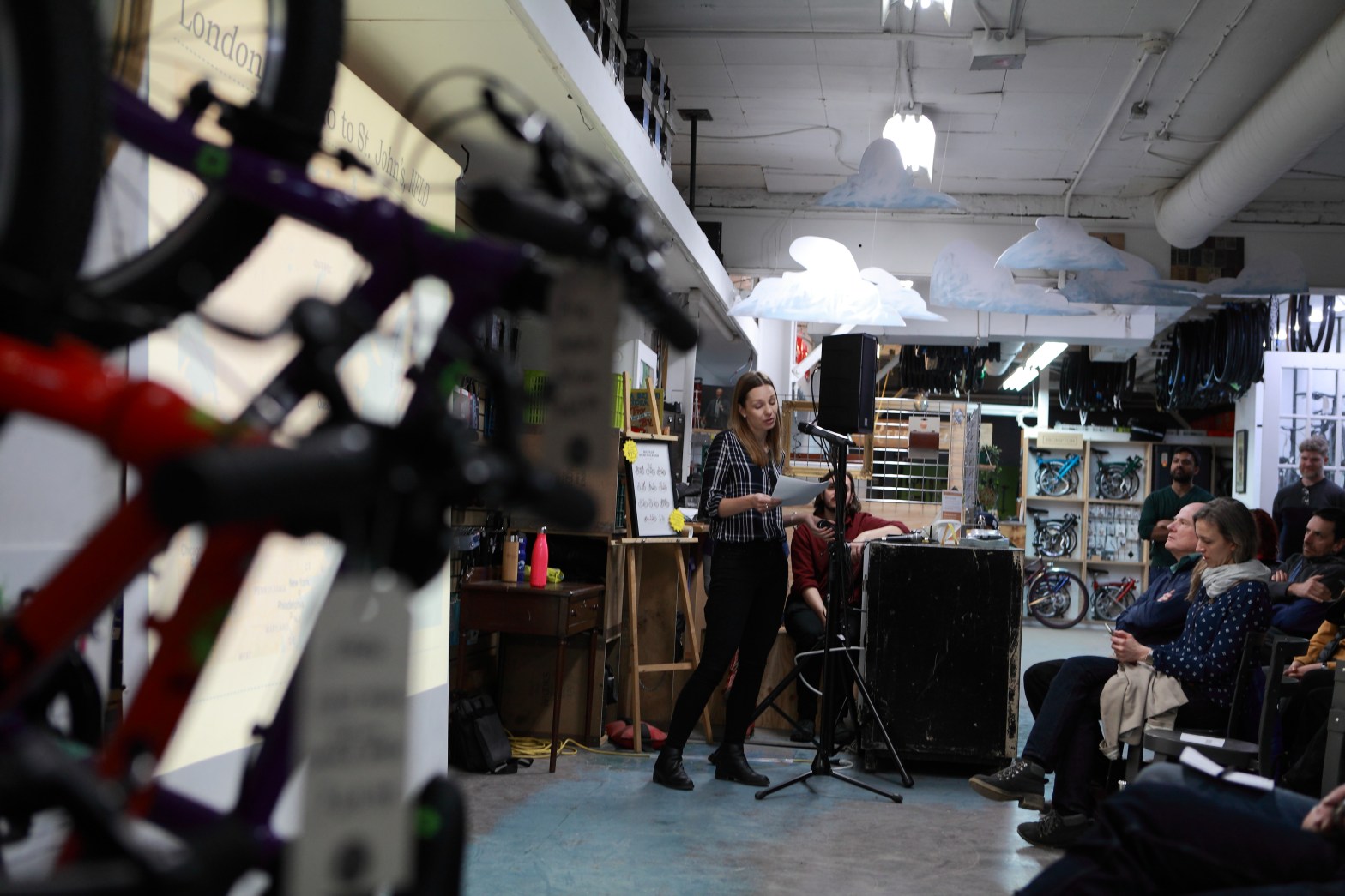


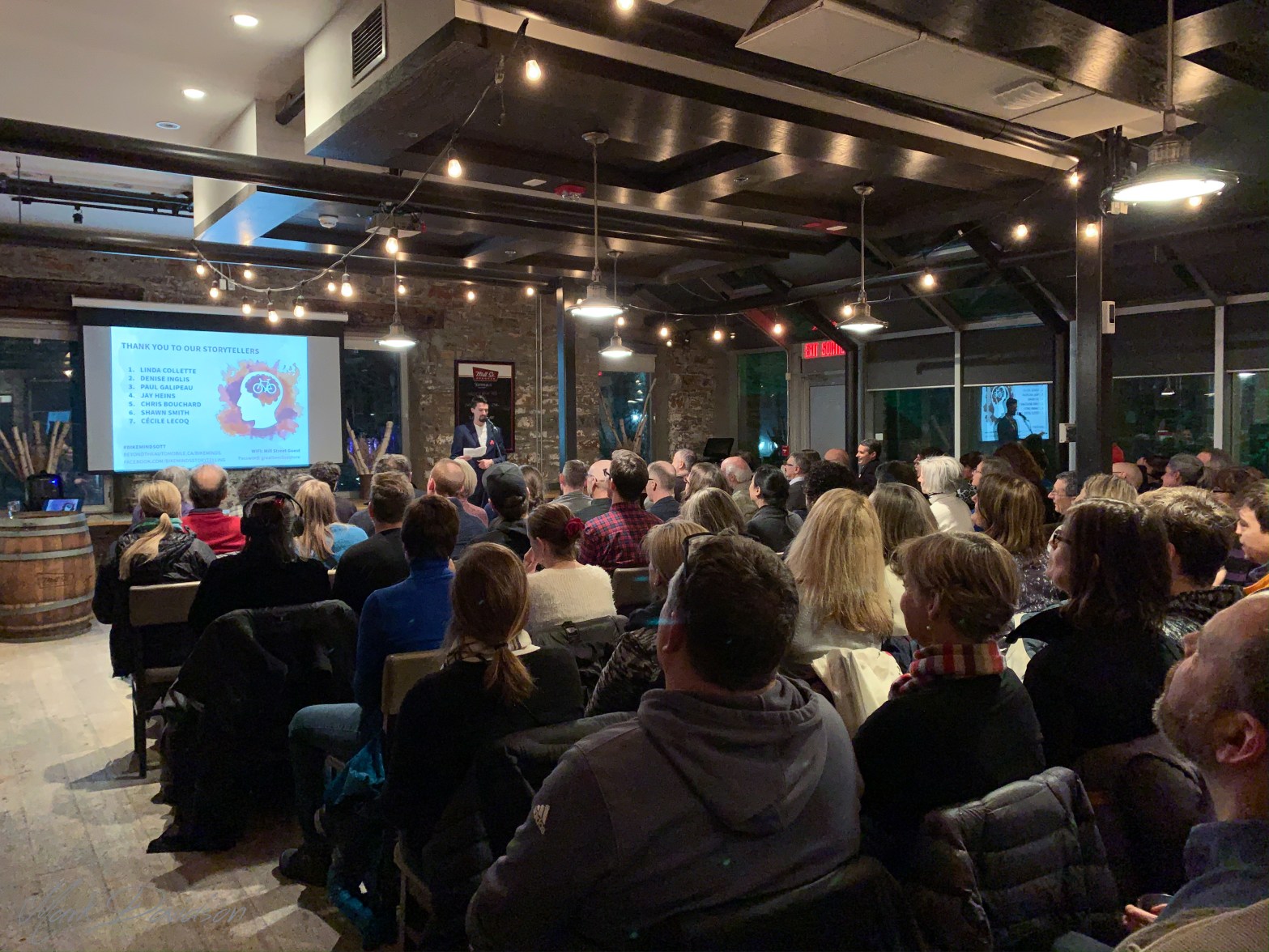

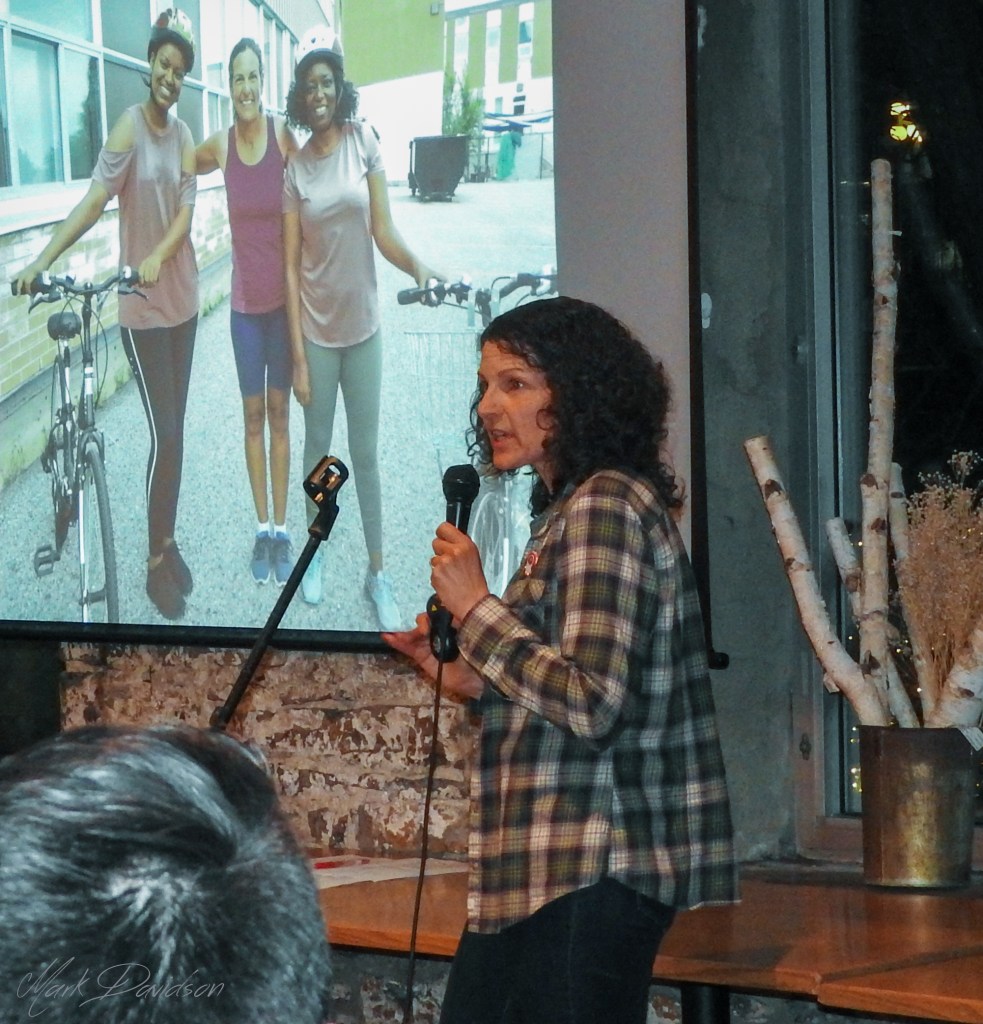
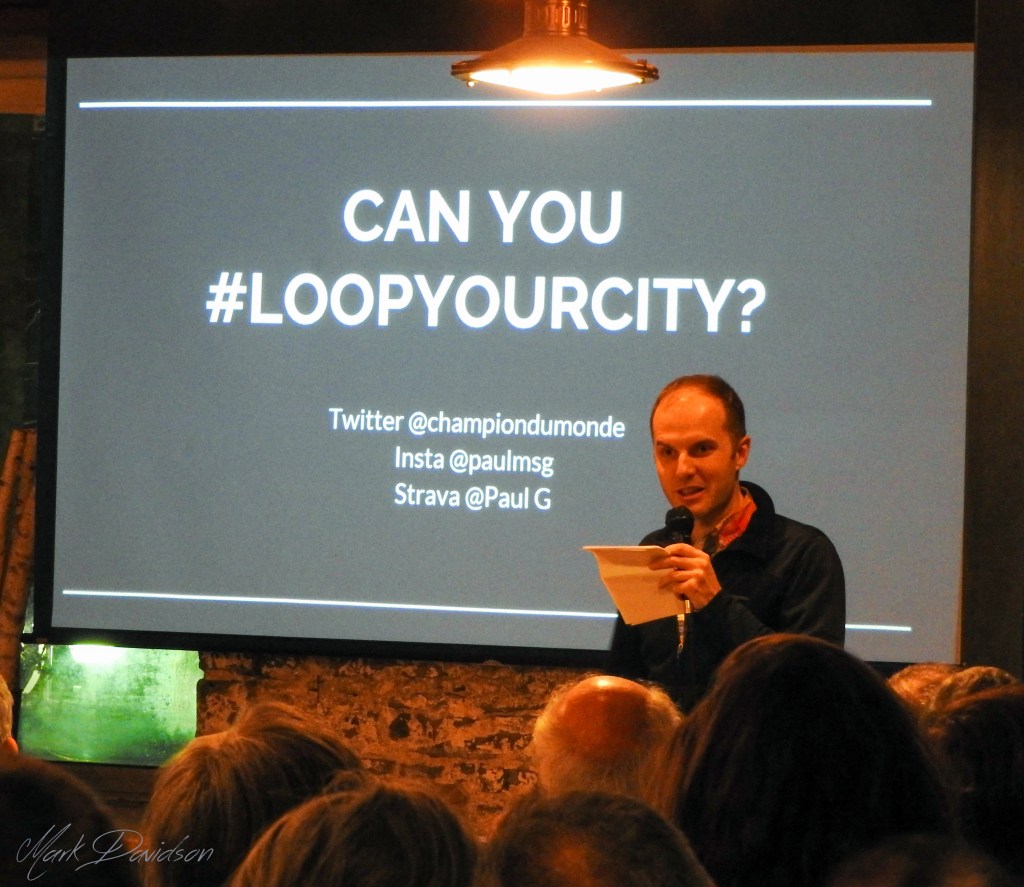

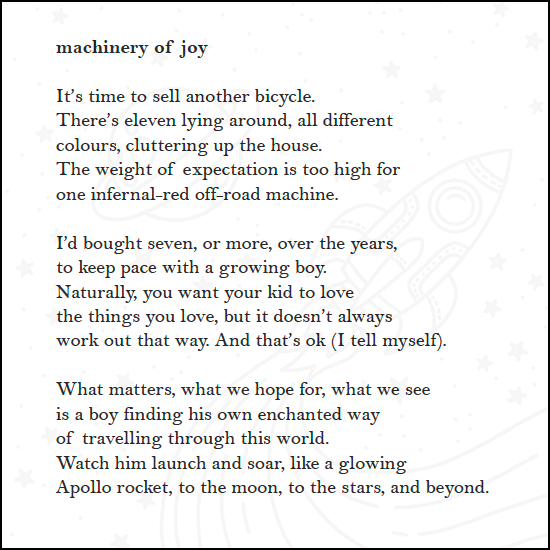
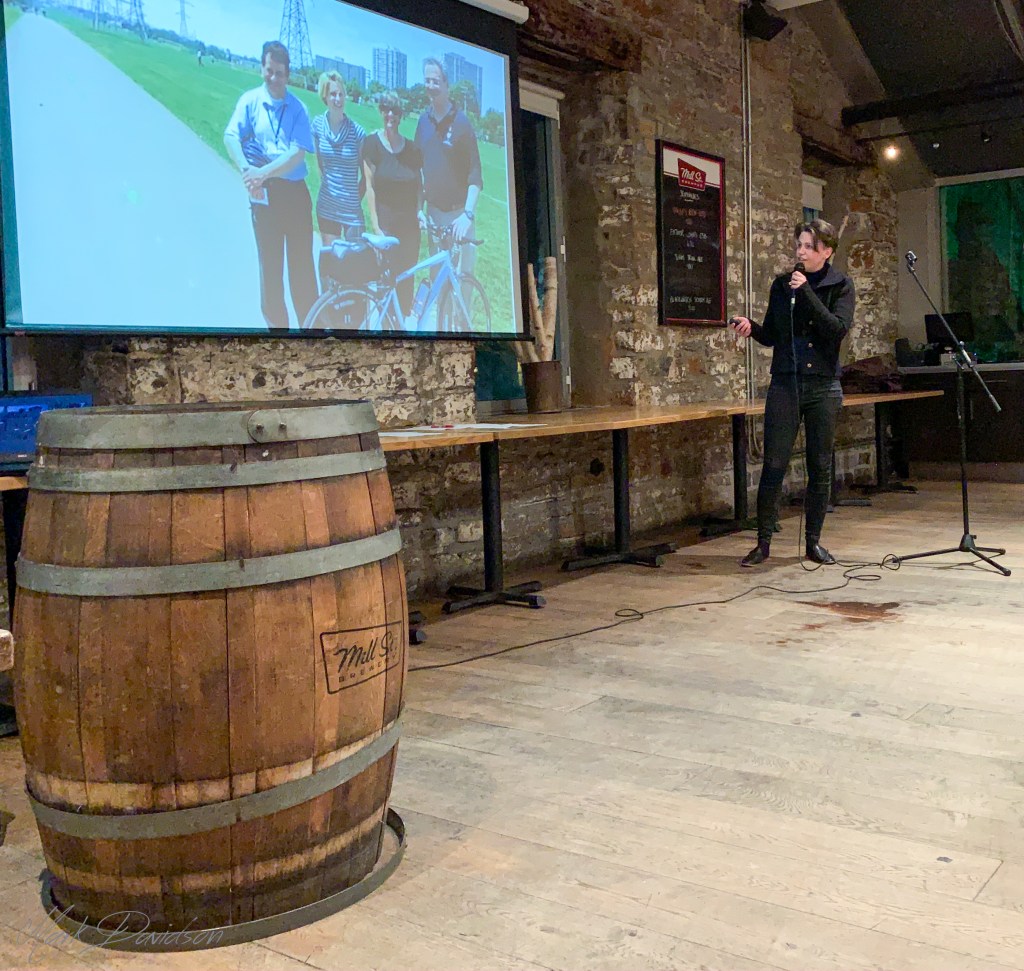

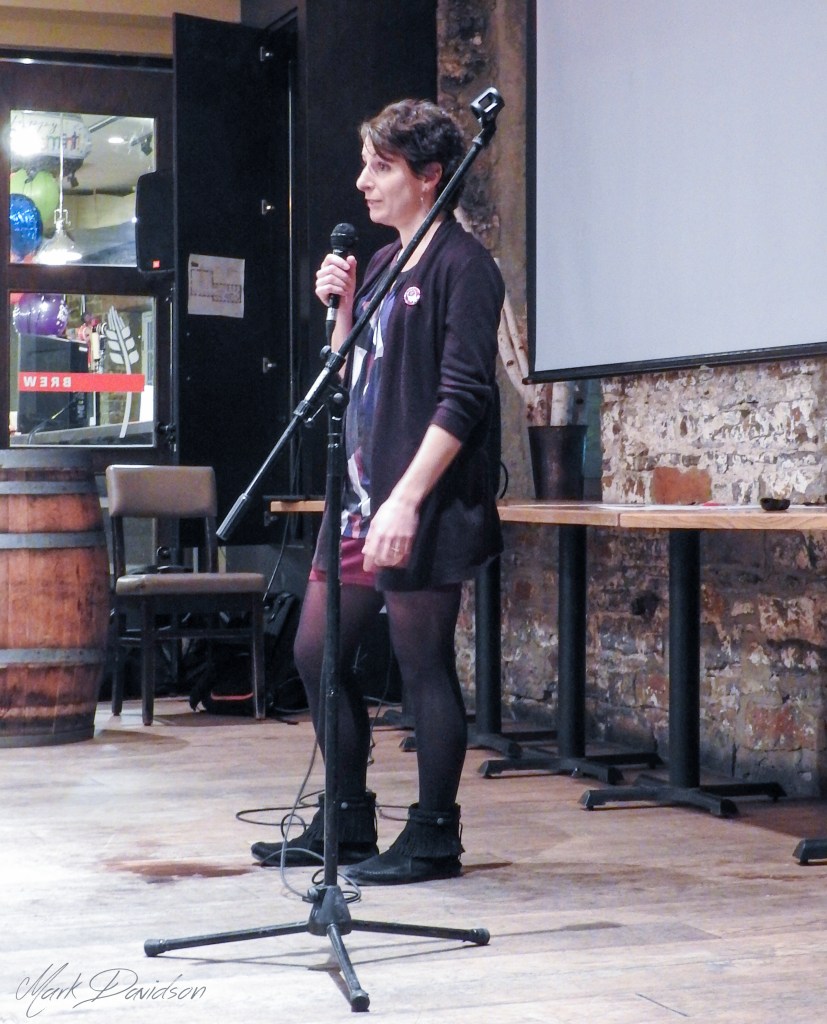






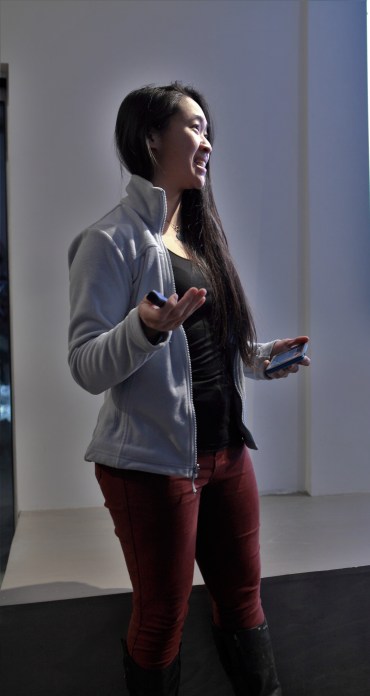
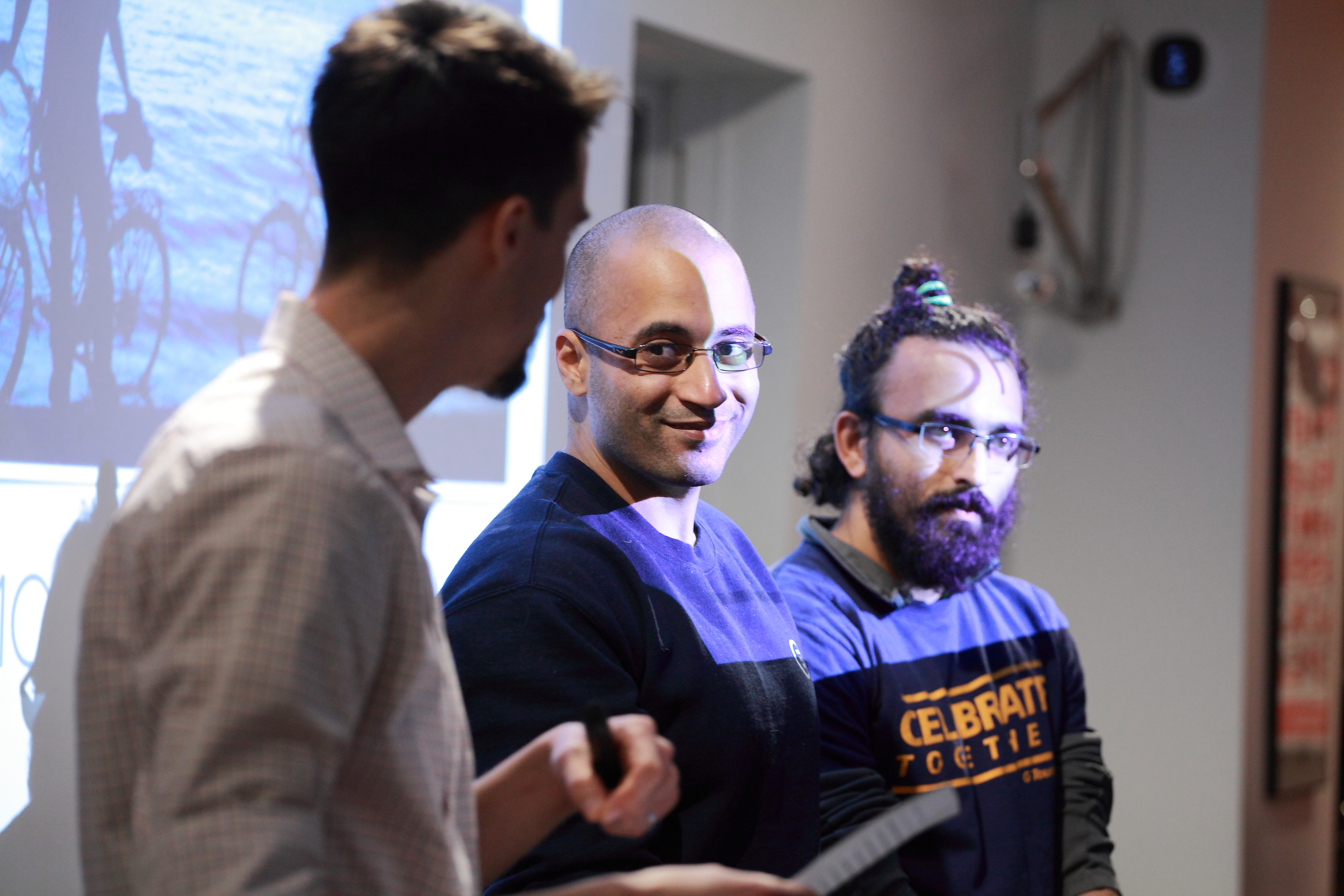
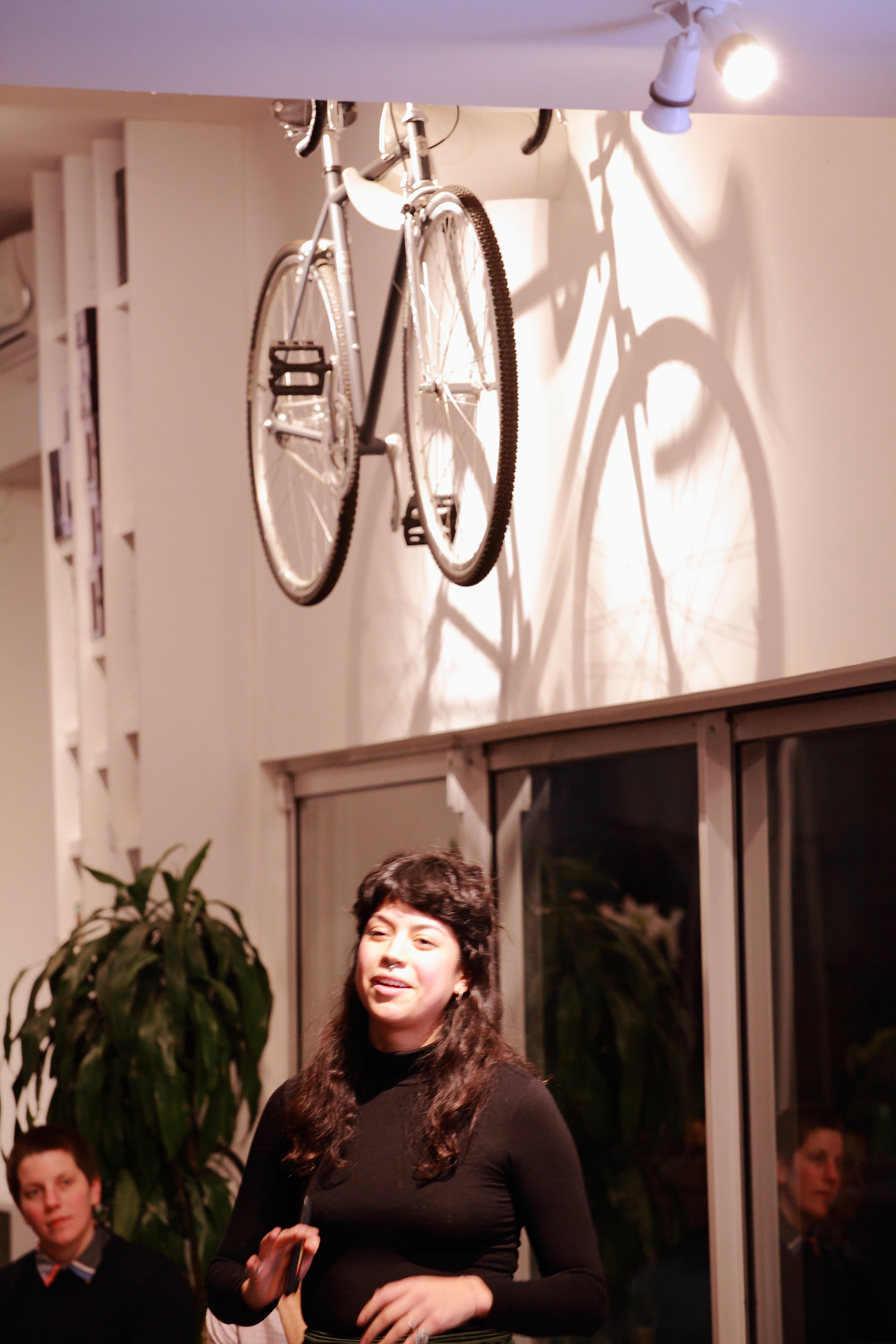

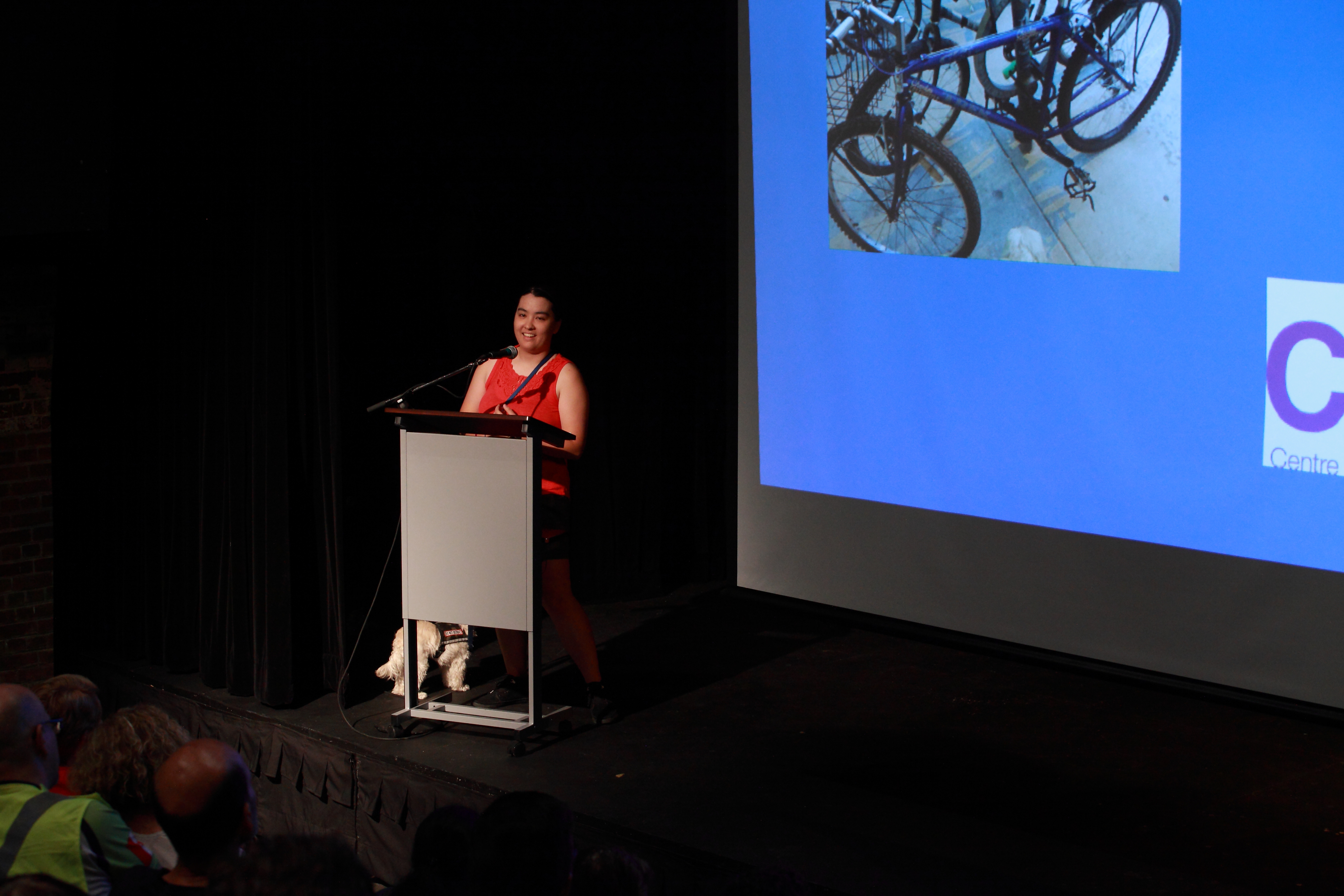
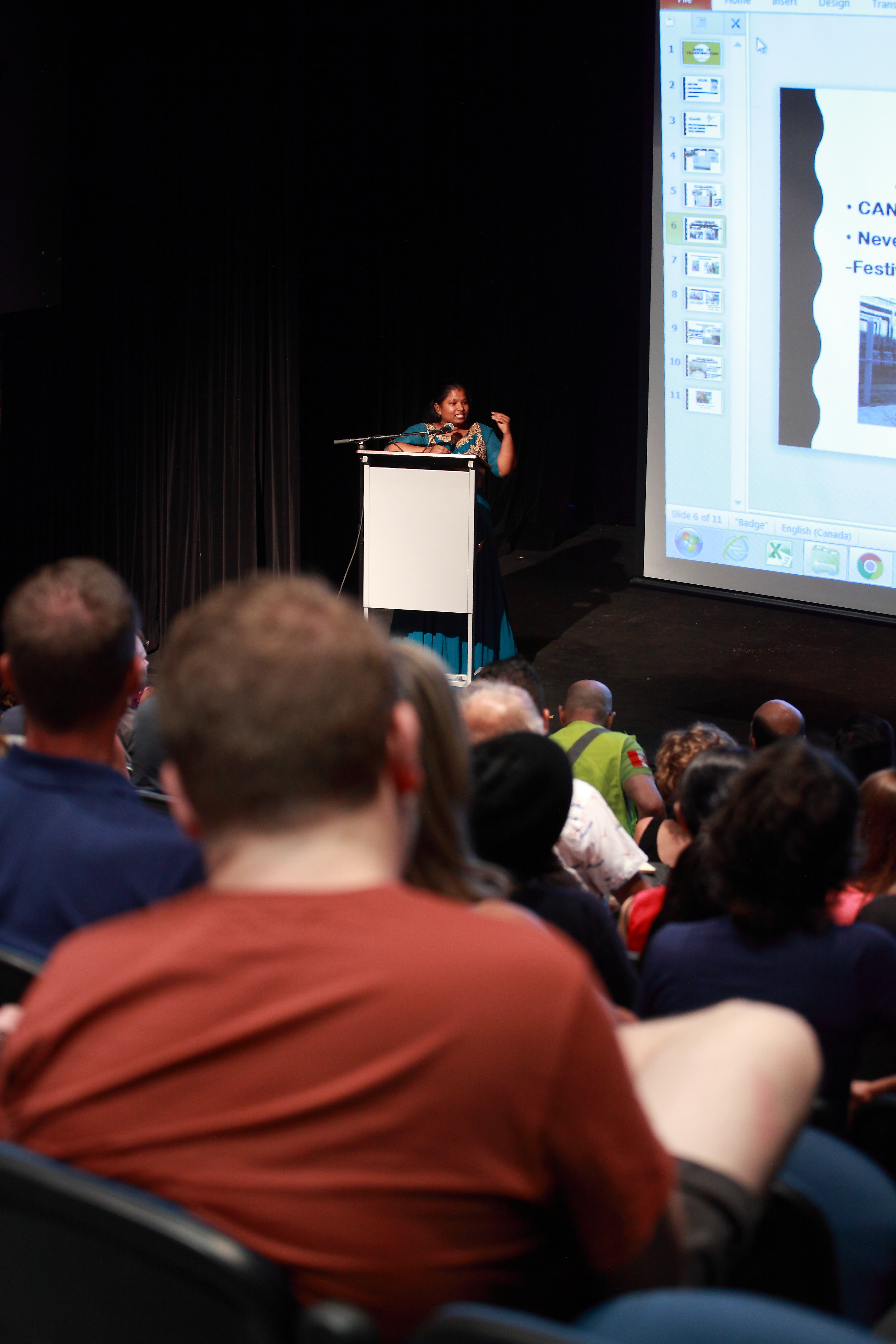

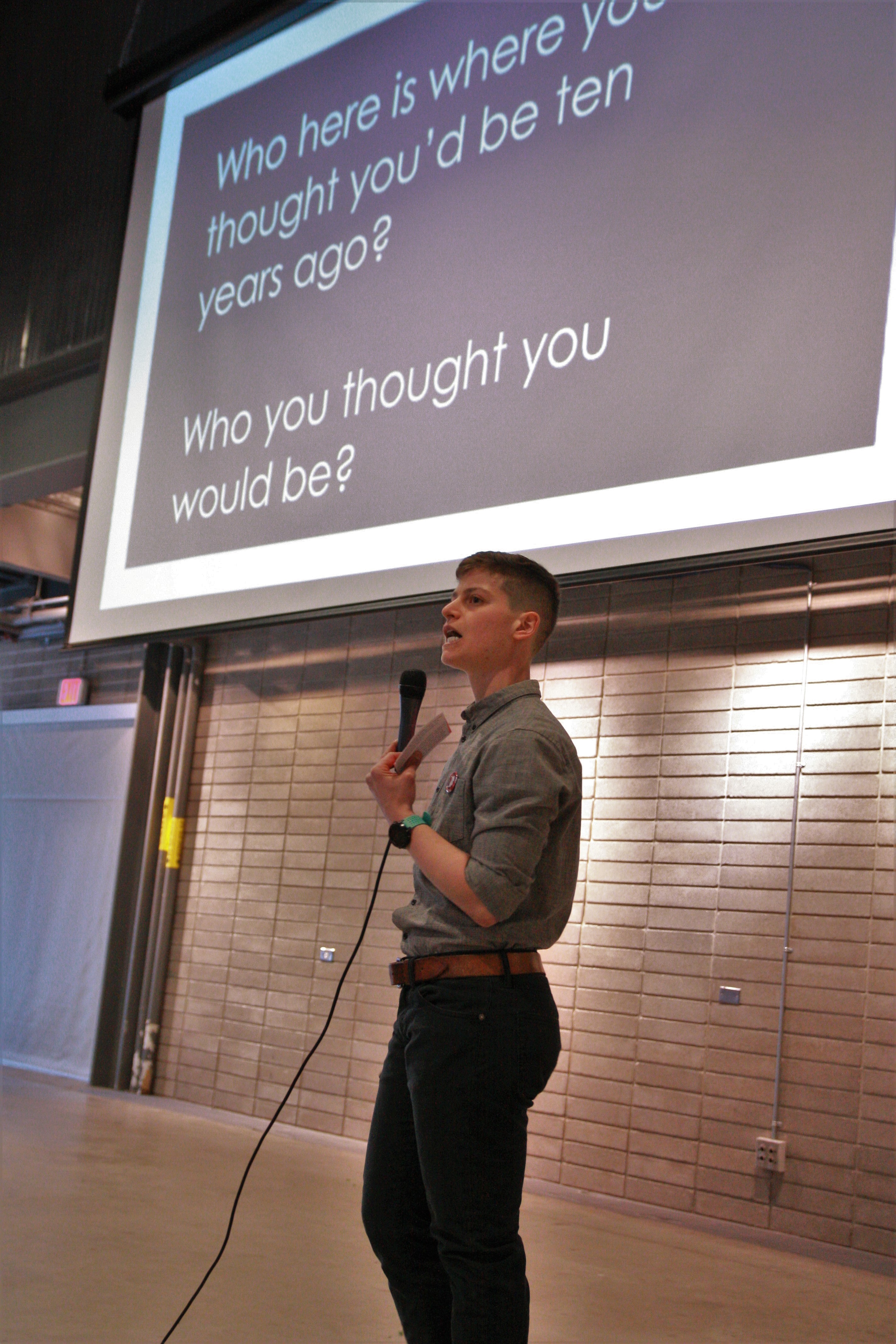
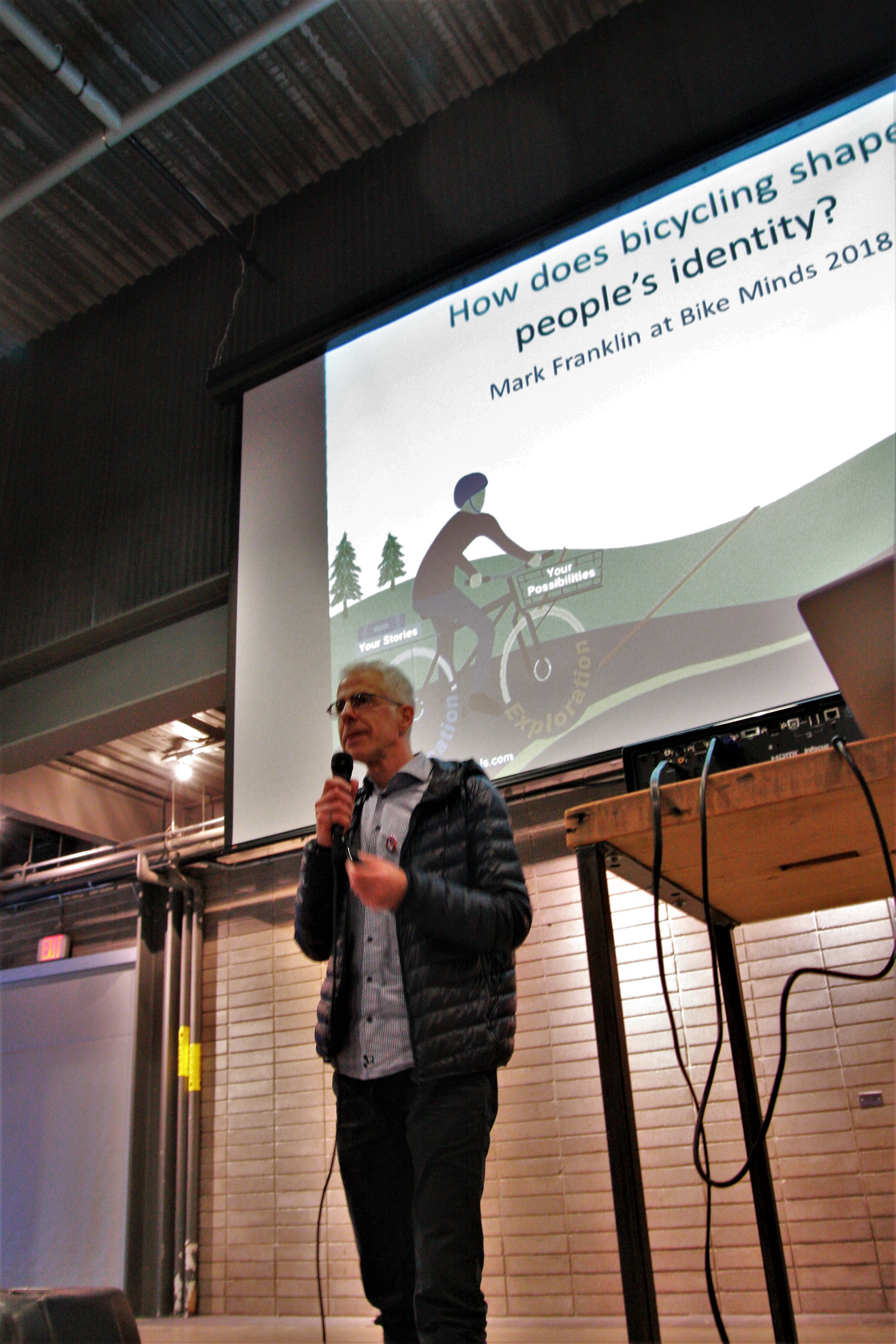
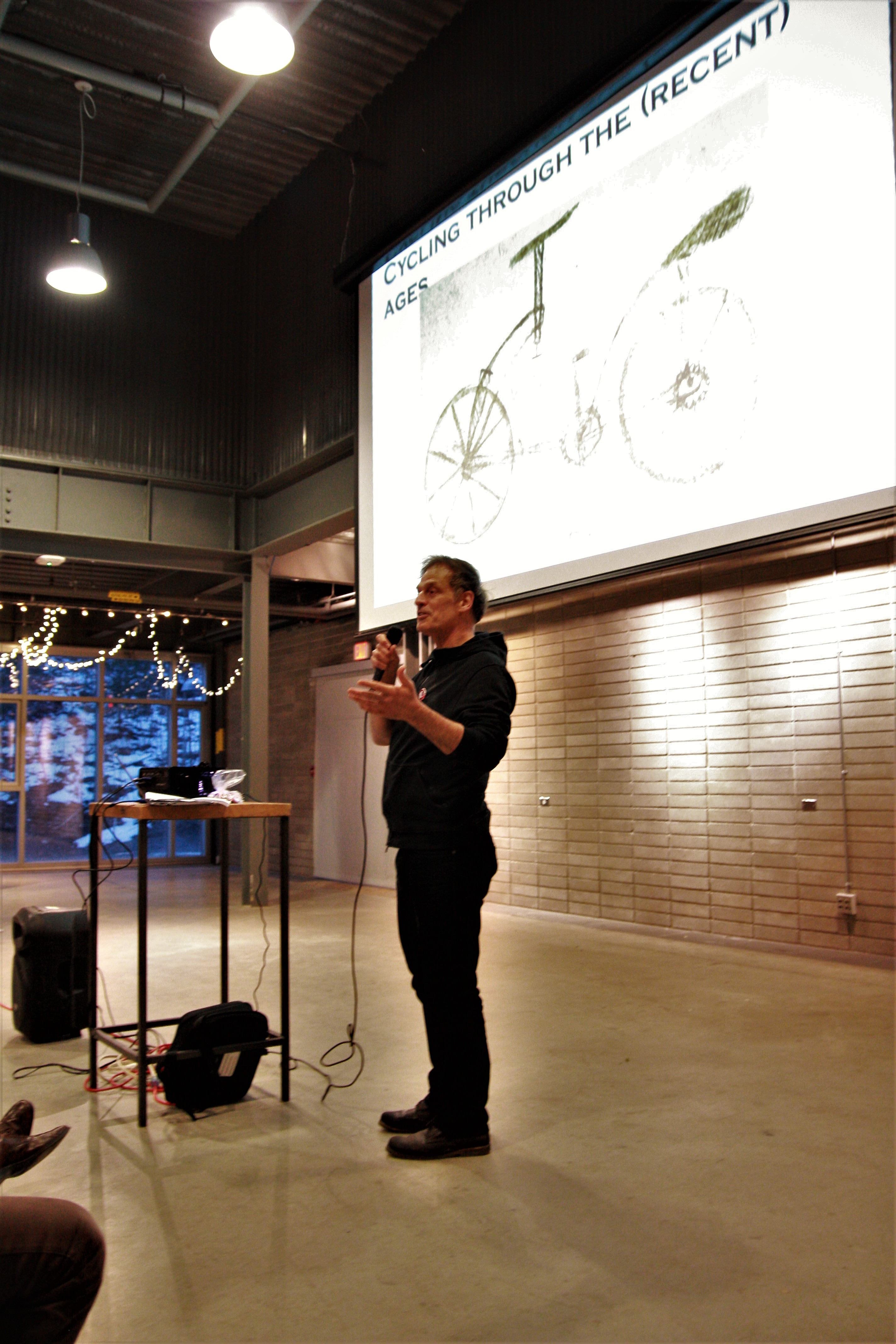
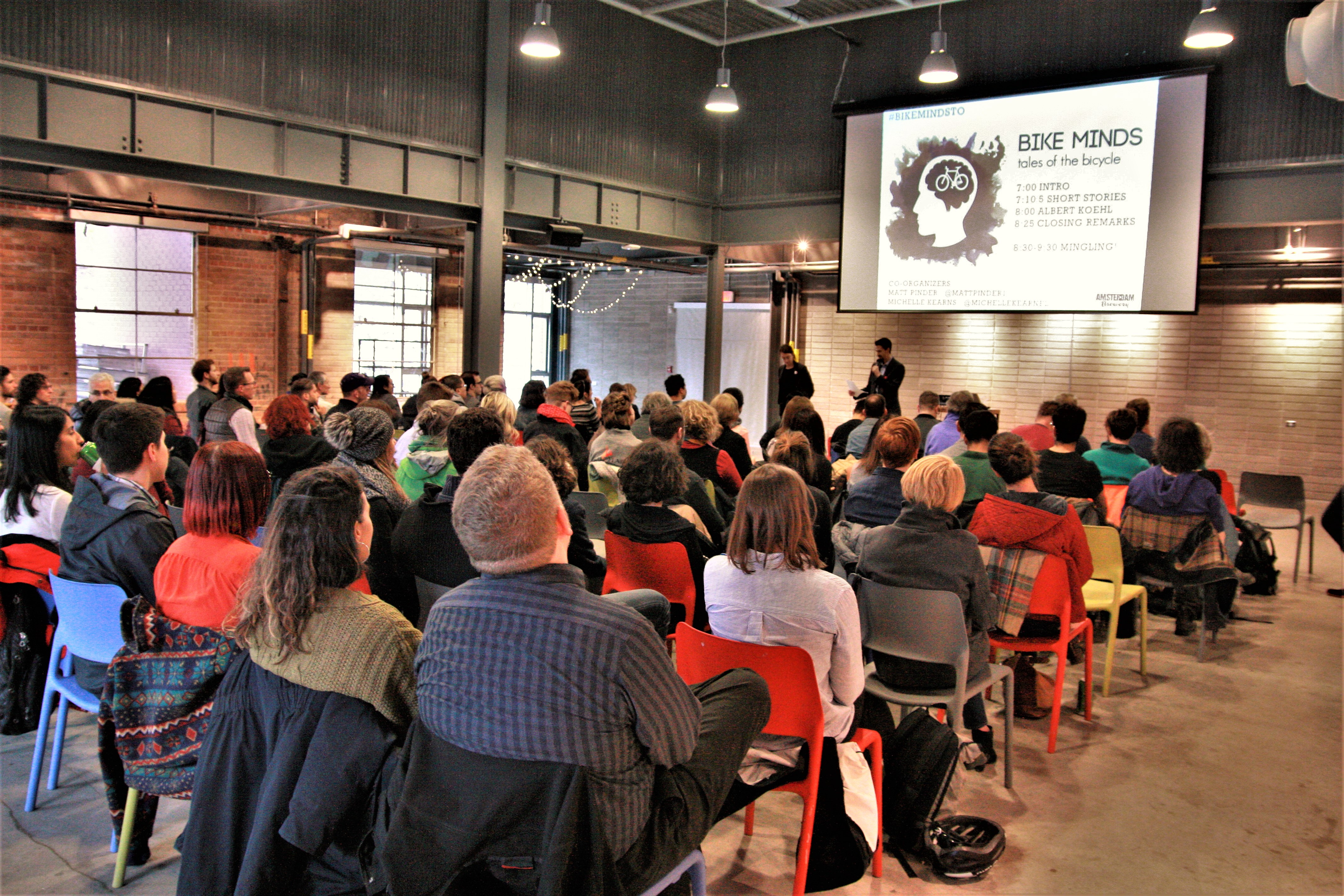




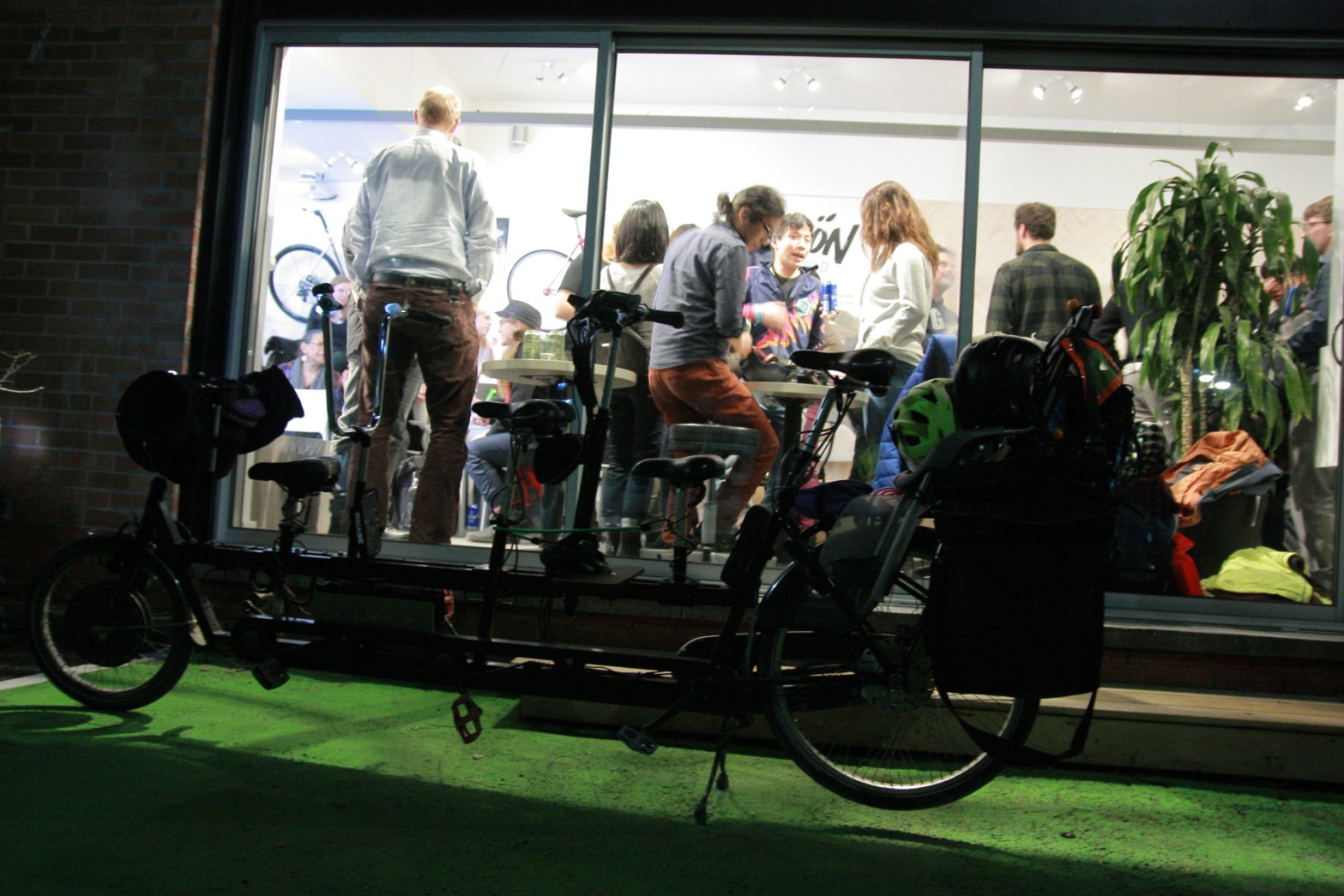
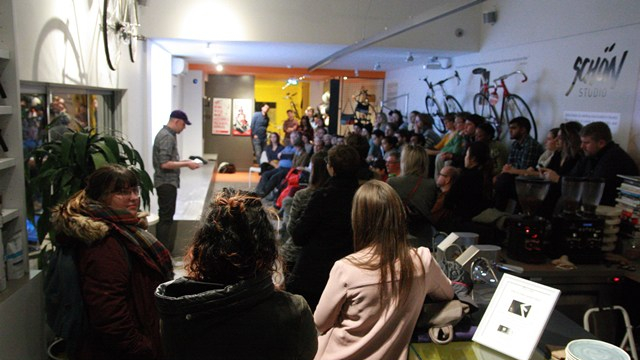




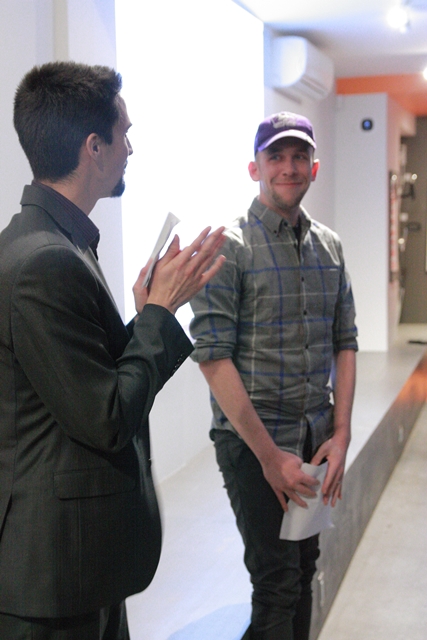
 BIKE MINDS